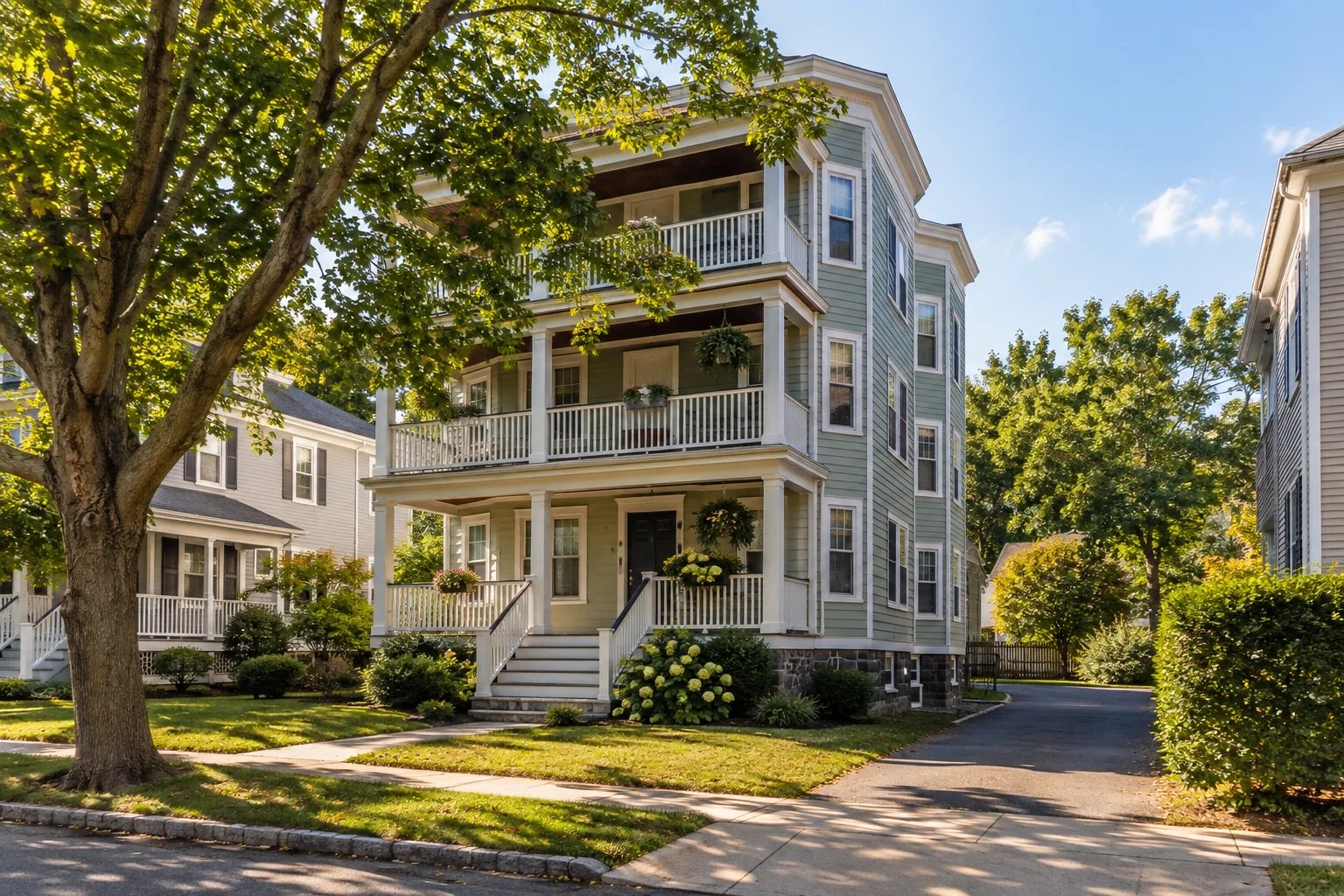
Replace a town-wide verdict with two real addresses
“Weston or Wellesley?” is a useful starting question, but a town name cannot describe an individual house, lot, route, or ownership obligation. Pick two properties that could fit your search and compare them with the same checklist. If you do not yet have a matching pair, write down the features that would make one worth considering and keep the search open.
Start with your lender's comfortable purchase range, the rooms and storage you need, and your most frequent destinations. Mark each priority as essential, flexible, or not yet sure. A comparison becomes more useful when you know which differences are deal-breakers and which are simply preferences.
Put the full property and ownership picture side by side
For each home, record the layout, condition, lot, parking, utilities, heating and cooling, available maintenance records, and any association or shared responsibilities. Ask what is included and which facts come from the seller, the listing, or a public record. If an answer is uncertain, keep it in the open-question column.
The monthly budget should be tied to a specific property. Ask your lender about financing assumptions, verify current tax information with the appropriate town source, and request insurance and utility estimates where available. Add maintenance and transportation costs that matter to you. Do not use a town-level average as a substitute for a property-specific estimate.
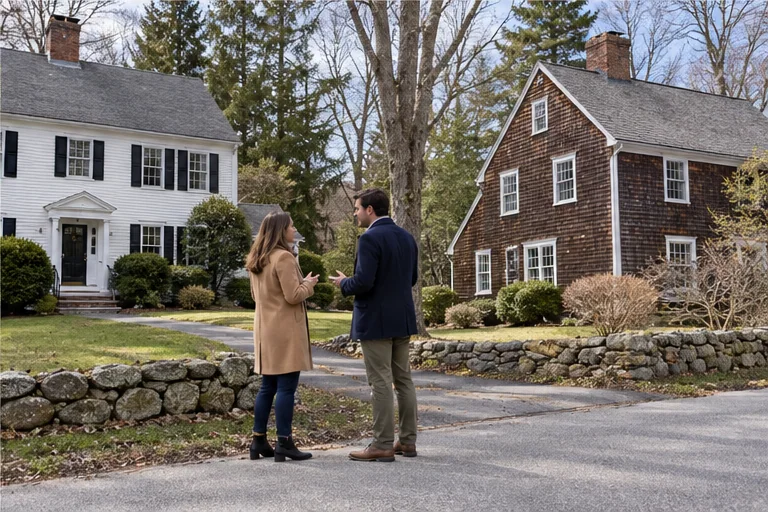
If one property has more land or a different style of construction, ask how that changes upkeep, access, and the kind of specialist review you might need. Do not assume an image of a large yard tells you who maintains it, whether there are restrictions, or where a boundary lies. Request the relevant documents and bring the open question to your agent, attorney, surveyor, inspector, or town department as appropriate.
Test the routes you will actually use
List your regular trips and compare each address using the schedule and transportation mode you expect. Check current transit information, parking, transfer details, or driving conditions with the official provider. A map can help plan a visit, but it does not prove door-to-door travel time or predict future service.
If your routine changes by weekday or season, write down the different trips. Include an occasional evening, family visit, appointment, or workday trip if it matters to you. Visit at a time that resembles your real routine when possible, then note what you observed rather than assigning a universal score to either town.
Take the same route notes for each address: start point, destination, time, transportation mode, and what still needs checking. For transit, confirm the station and current service; for driving, account for the hour and the actual entrance or parking arrangement. If the trip is important enough to influence your offer, verify it directly rather than relying on an agent's memory or a general map estimate.
Ask the right professionals to clarify open facts
An inspection addresses accessible physical conditions; a surveyor can address boundary questions; the town can explain its records; and your attorney can review contract terms and legal documents. If either home has a private well, septic system, shared driveway, conservation-related question, or unusual renovation, ask which specific records and professionals are appropriate.
Keep one folder for each property and record the date and source of each answer. The comparison scorecard below helps you rate two homes against your own priorities; it is not a town ranking, appraisal, or guarantee. For a Weston or Wellesley search, talk with Rita about the properties on your list and review her local services as you decide the next step.