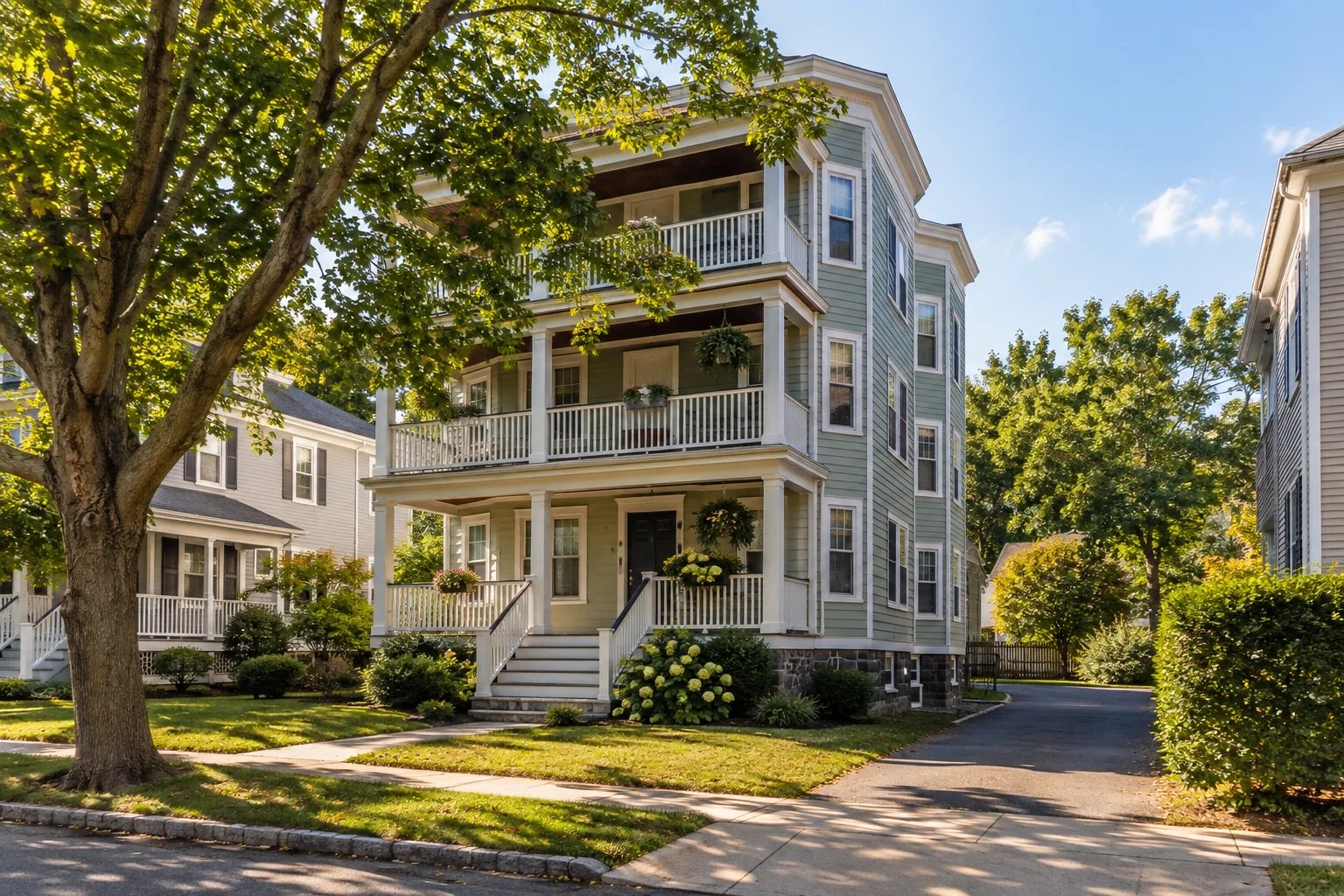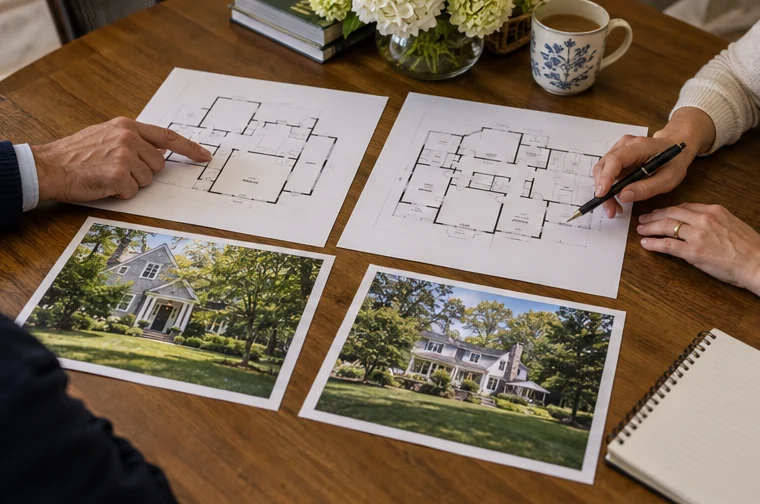
Begin with the layout you will use
When both Sudbury and Wayland are in a search, compare specific homes rather than assuming their town names describe the property. Start with the rooms and circulation you need: how people move through the home, where work happens, where items are stored, and how the layout handles stairs or accessibility. A floor plan can help you ask questions, but verify room dimensions and intended uses during a visit or with the relevant records.
Mark each feature as a requirement, preference, or open question. If a flexible room could serve several purposes, describe those options. This keeps a comparison useful when one property is older, has an addition, or arranges living space differently. Rita can help coordinate a search across Sudbury and Wayland using the homes and requirements you identify.
Treat the lot as part of the responsibility
For each property, note the apparent slope, drainage, trees, retaining features, outdoor structures, driveway length, and areas requiring seasonal care. A single walk cannot establish how water behaves in every storm or where a legal boundary lies. Record what you saw and ask an inspector, surveyor, engineer, arborist, or other specialist when the condition calls for more review.
Ask for lot plans, recorded easements, septic or well information where applicable, and maintenance records. An online parcel map may help you orient yourself, but it is not a boundary survey. A large yard can create options and obligations; neither should be assumed until you understand the actual property's lines, access, applicable restrictions, and upkeep.
Compare verified costs and known systems
Discuss financing with the lender and gather current tax, insurance, utility, and maintenance information for each address. Keep one-time work separate from recurring expenses. Note whether a figure came from a current bill, a quote, a listing, or a rough estimate. The price of a nearby home cannot substitute for a property-specific figure.
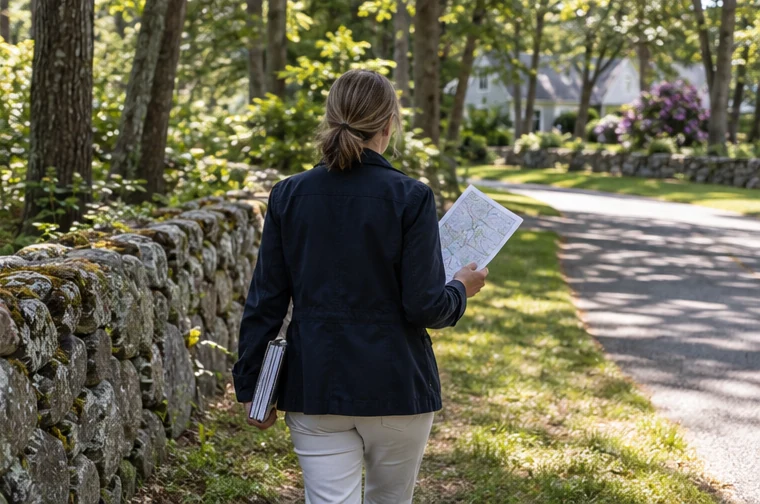
Review the age and service history of heating, cooling, roof, plumbing, and electrical systems when documents are available. Use an independent inspector and arrange specialist evaluations when needed. If one home has an addition, outbuilding, or unusual system, ask which town records and technical reviews fit that feature. Do not treat an assessor card or permit lookup as proof of present condition.
Check access and your real destinations
Test routes from each address at your expected travel times. For public transit, confirm current schedules, station access, parking, transfers, and the walking route. For driving, check the full trip rather than distance alone. If access or traffic matters, revisit at the times that best represent your routine. The comparison should reflect the people who will use the home, not an assumed commuter profile.
During tours, notice how you enter, where guests park, and whether an area appears shared. Ask who handles snow removal, repairs, and common access when documents indicate shared responsibility. Keep the source next to your notes and ask an attorney to interpret recorded rights if they could affect your intended use.
Score only what you know
Use the interactive worksheet below to compare two actual homes on the categories that matter to you: layout, lot care, recurring costs, route, condition, and records. Leave a category unrated when information is missing. The scores are your own prompts and do not establish value, forecast repairs, or declare one town a winner.
After scoring, circle the open question with the greatest effect on your comfort or plans. Request that document, schedule the relevant specialist, or revisit the route. Learn about Rita's local work or share your property shortlist to discuss the next step. Keep each address's documents and follow-ups separate so one home's information does not get attached to another.