Start with the improvement you are trying to understand
If a listing mentions a finished basement, addition, new deck, expanded kitchen, or replaced system, ask what work was done, when, and who performed it. Request available permits, plans, inspection records, invoices, and warranties. Keep marketing descriptions separate from official documents and from your own observations during the tour.
A building permit record can help clarify what was submitted or reviewed, but it does not replace a physical inspection, confirm every aspect of completed work, or answer every question about a property's present condition. If the work affects structure, plumbing, electrical, fire safety, zoning, or another technical area, ask a qualified professional what should be checked.
Begin with the municipality's official records
For Natick, use the town's official online permitting and licensing portal to search or request permit information. For Framingham, start with the city's Inspectional Services Department, which publishes building permit and inspection resources. The portal or department can explain what records are searchable, how to request older files, and which office handles a particular question.
Search by the address and, when available, a parcel or permit number. Save the record date and the exact document you reviewed. Older work may be indexed differently or held outside an online system, and a portal search may not show everything in a town file. Ask the department how to confirm whether more records exist rather than treating an empty search result as proof that no work was done.
Compare the record with the house you saw
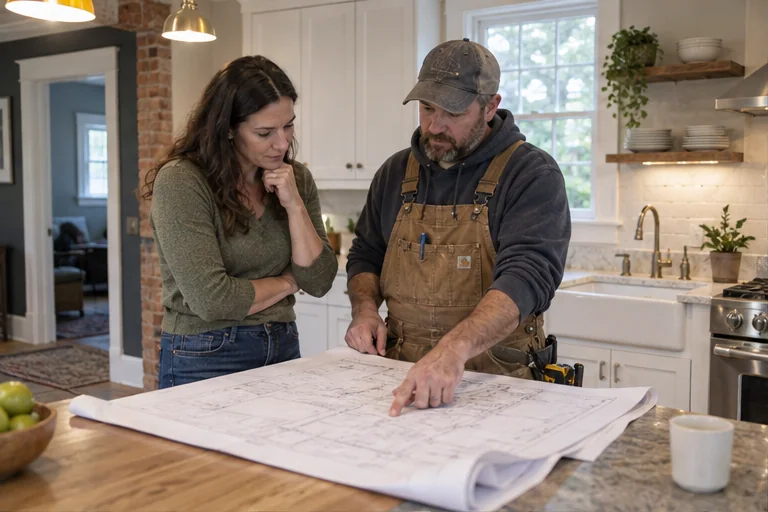
Read the permit scope and any inspection notes alongside the listing and your tour observations. Does the documented area match the room described? Is the permit final, still open, or only an application? Does the plan refer to the same address and project? These questions help identify gaps to clarify; they do not determine whether the work meets code or what corrective steps are needed.
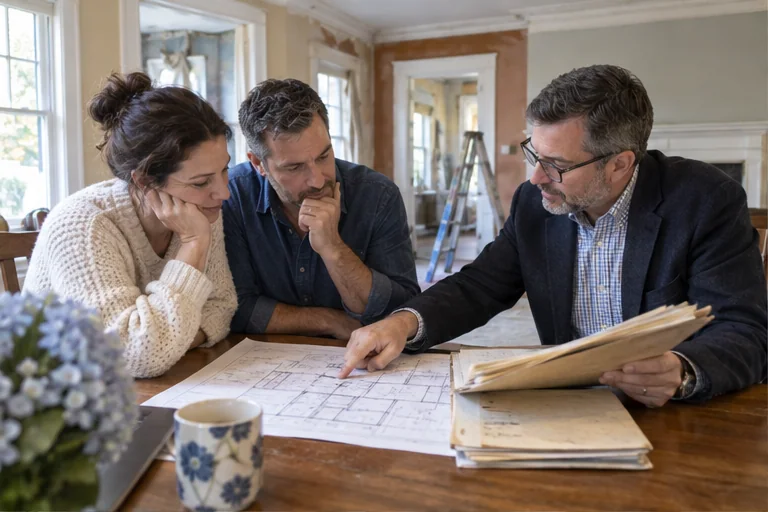
If a document lists an inspection, ask what stage it covered and whether later approvals or records are available. If plans do not match the current layout, request an explanation from the seller or town office and have the appropriate professional review the difference. A contractor can assess visible work; an engineer or other specialist may be needed for a specific structural or system question.
Ask whether the seller has a final sign-off, a correction notice, an amended plan, or correspondence that followed the initial permit. A project may involve more than one department, and a building file may refer you to plumbing, electrical, conservation, or zoning records elsewhere. The town staff can explain how to request those records and what their status means. Keep the original files as received and note which items came directly from a municipal source.
Before relying on a permit record in an offer discussion, confirm that the address, project description, and dates correspond to the improvement you saw. If the record uses an unfamiliar status or the work appears broader than the approved scope, ask a municipal official to explain what the portal shows and take the remaining question to your attorney or inspector. This record review is one part of due diligence; it is not a code-compliance certification.
Keep findings attached to the right decision
Add each open question to your property file with its source, the person responsible for follow-up, and the date you need an answer. Your Massachusetts attorney can explain any effect the information may have on the contract; your inspector can discuss condition; and the building department can clarify its records. Avoid asking one professional to answer a question outside that role.
Use the interactive field notes below to track documents and people to contact. For a Natick or Framingham search, Rita can help organize local property questions; review her work in Boston and MetroWest as you assemble the right team.