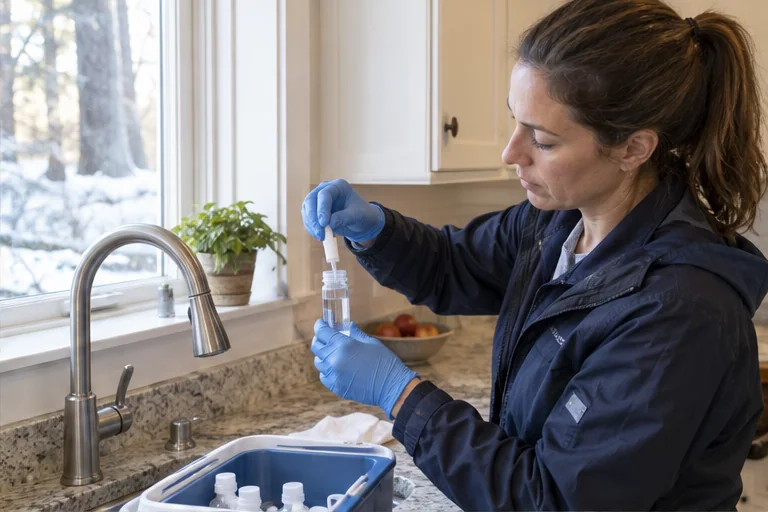
Confirm whether the home has a private well
Do not infer the water source from a town name, road, or nearby property. Ask the seller what serves the house, request available utility bills or well records, and verify the information with the municipality or water provider. A home may have a private well, public water, or a combination of property-specific arrangements that need separate clarification.
For a private well, the Massachusetts Department of Environmental Protection says local Boards of Health or Health Departments regulate private wells, and MassDEP recommends that prospective homebuyers test the water before purchase. Start with the state's guide to water quality testing for private wells and contact the local Board of Health about requirements for that address. State guidance and local rules can differ, so confirm them before arranging a sample.
Request the well's existing information
Ask for prior laboratory reports, well construction details, maintenance and repair records, pump information, treatment equipment records, and any notices from the local health authority. Note the date, laboratory, parameters tested, and which well the report covers. A prior result can provide context, but it does not automatically answer current requirements or every question about water quality.
MassDEP recommends using an appropriately certified laboratory for private drinking-water tests. Ask the lab and local Board of Health how a sample must be collected, which tests apply, how results will be delivered, and what to do if a result needs explanation. A sample that was collected or handled incorrectly may not answer the question you intended to ask.
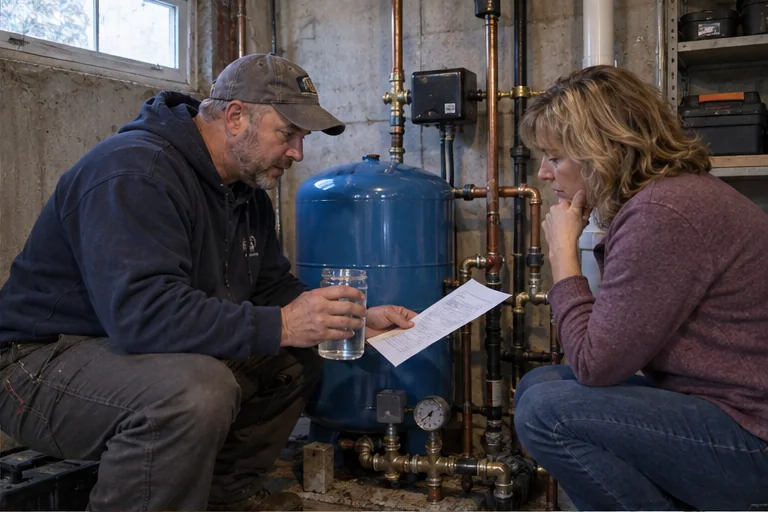
Review results with the right people
Keep the laboratory report and any follow-up with the property records. Ask a qualified water professional or local health official to explain a result you do not understand. Do not rely on taste, smell, or appearance to determine whether water is safe; MassDEP notes that some contaminants cannot be detected that way. If treatment equipment is present, ask for its service records and have the appropriate professional explain its purpose, maintenance, and limits.
Testing is only one part of understanding the well. Ask where the well is located, what records or protections apply to its area, and whether construction or repairs are documented. A property inspector, well contractor, laboratory, Board of Health, and attorney have different roles; a general real-estate article cannot interpret your report or provide a health determination.
When a report arrives, verify that the property address, sample date, lab name, and tested parameters match the records you requested. Ask the laboratory or health authority to explain any units, reference values, or follow-up instructions you do not understand. Do not compare one result with a number copied from an unrelated property's report; the professional reviewing the sample can tell you which current standards and local rules apply.
If the property has a filter, treatment unit, storage tank, or other water equipment, ask for its purpose, service history, and any manual or maintenance agreement. A device's presence does not prove that a specific concern has been resolved. Request a professional explanation of how the equipment relates to the most recent test and whether any additional sample or ongoing service is recommended for that well.
Add the result to your purchase questions
Record who will arrange the sample, who pays for it, how the report will be delivered, and which contract dates may matter. Your attorney can advise on the written terms; your lender can say whether it requires testing; and the local authority can clarify its rules. Do not assume a particular test or result is a universal requirement for every Massachusetts property.
The field notes on this page help you track documents and follow-up. For a MetroWest search, Rita can help organize local property questions, while the Board of Health and qualified water professionals explain the well serving the address. Learn more about Rita's services.