Treat the showing as a question-finding visit
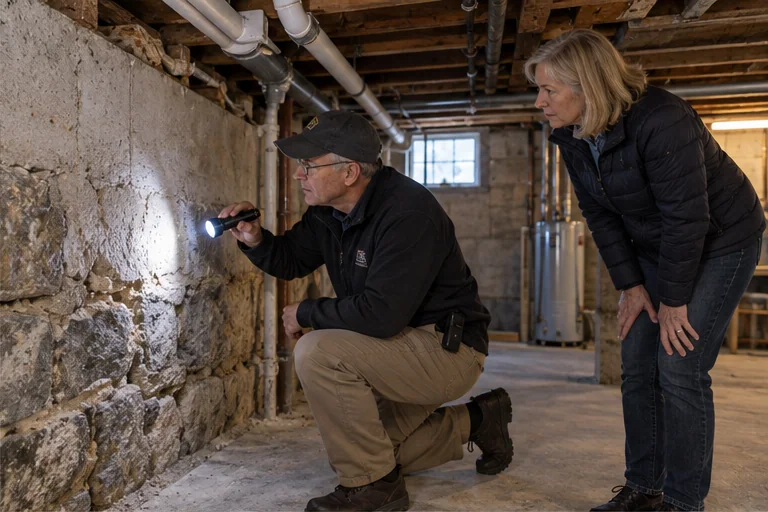
Older homes around Boston and MetroWest can have different construction histories, renovations, additions, and maintenance records. Age alone does not determine condition. During a showing, note what you can see, what you cannot access, and what needs a qualified inspector to review. Keep observations separate from guesses, and do not treat a fresh finish as proof of what is behind it.
Start with the path water might take: roof edges, gutters, grading, basement walls, and areas where you notice staining or musty odors. Ask whether the seller has information about past water entry or repairs. Photographing or making a note of an observation may help you remember it later, but avoid opening panels or moving stored items without permission.
Ask about the systems as a connected whole
Record what is visible about heating, electrical equipment, plumbing, ventilation, roofing, windows, and visible structural areas. Ask what the seller knows about the age, service history, and recent work on major systems, then request available invoices, permits, manuals, or warranties. If an answer is unknown, leave it unknown until a professional or record can clarify it.
Massachusetts requires home inspectors to evaluate readily accessible and observable components within the scope of a standard inspection. Read the state's consumer guidance on residential home inspections and consumer fact sheet for home inspectors. A general inspection is not a destructive investigation and does not necessarily answer every specialized question about a property.
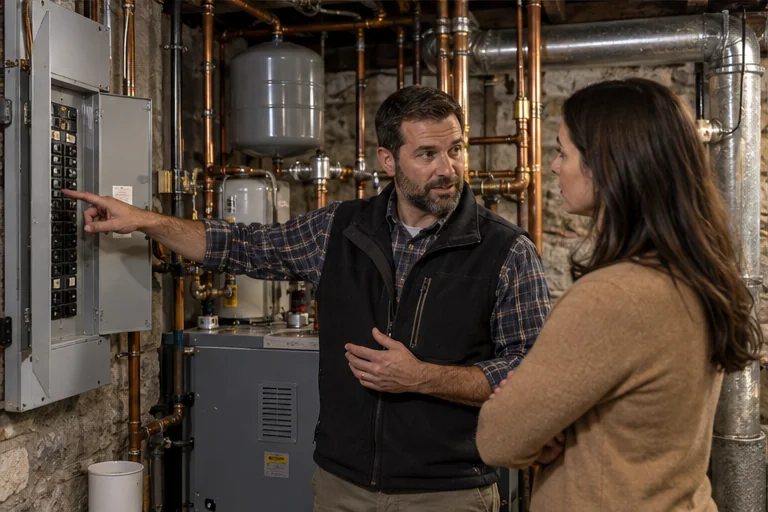
Make a short circuit of the tour instead of trying to memorize everything. At the exterior, note visible grading, downspouts, steps, decks, and areas where water may collect. Inside, record windows or doors that do not operate as expected, visible stains, unusual odors, and rooms whose use is not obvious. In the basement or utility area, list the equipment you can see and the records you want to request. Do not operate unfamiliar equipment, enter an unsafe area, or move belongings to investigate. The inspection professional can explain what was accessible, what was not, and whether another reviewer should be involved.
Record the weather and date if conditions affect what you observed, and write down whether an area was blocked or unavailable. A dry basement visit does not answer every question about a wet season, just as a rainy-day observation does not identify the cause of a stain. Let the inspector explain any limitations and recommend follow-up where warranted.
Match each concern to the right reviewer
If the house has an older boiler, unusual wiring, an addition, signs of movement, a chimney, a private well, or a septic system, ask whether a specialist should evaluate that feature. The appropriate professional depends on what is observed. A home inspector, electrician, plumber, structural engineer, chimney professional, septic inspector, attorney, or town department may address different parts of the question.
Talk with your attorney about the current Massachusetts inspection rules and the contract terms for the particular sale. State rules are time-sensitive, and transaction facts matter. Do not rely on a tour conversation or an online checklist to waive, change, or interpret a contractual right.
Leave with a record, not a verdict
After the appointment, write down the date, address, visible observations, answers you received, and items that need verification. Ask the inspector to explain the limits of the inspection and to identify where additional evaluation may be warranted. If a report notes a concern, use the report and the appropriate specialist to understand it before deciding what it means for your budget or offer.
The interactive field notes on this page help you mark questions to discuss. They do not grade a home, predict repair costs, or replace an inspection. For a home search in Natick, Framingham, or greater Boston, Rita can help organize local showings and questions; meet Rita and review her services to decide whether her support fits your plans.