Make the visit answer a question
A neighborhood visit can help you test access and routine, but it is not a reliable way to judge an entire town in one afternoon. Before you go, choose a specific question: Can I reach the places I visit each week? Is the walk from the home to transit usable for me? Does the street feel comfortable at the time I expect to arrive? Keep the question tied to your own plans.
Write the property address, date, time, weather, and route at the top of your notes. Conditions can vary by season and time of day. A single visit is one observation, not a permanent description of the area.
Walk the route from the front door
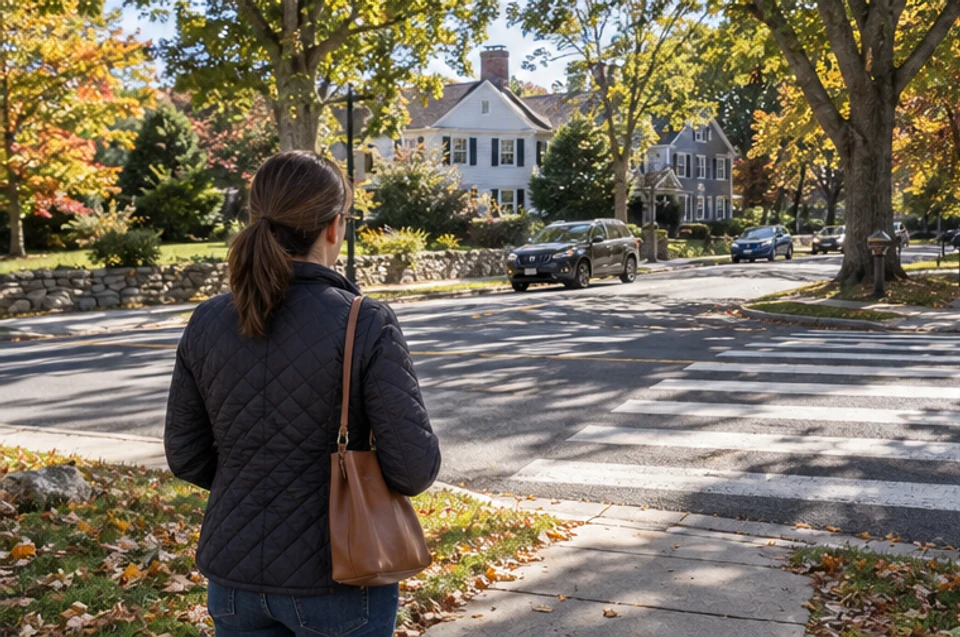
If you plan to walk to a stop, store, or regular destination, try the path you would actually take. Notice crossings, curb cuts, sidewalk continuity, hills, lighting, and the distance between the property and the entrance you need. A map line may not show stairs, a missing sidewalk segment, or a gate. Use care near traffic and do not enter private property.
If accessibility is important, evaluate the path with the person who will use it and a qualified professional where needed. A neighborhood map or street-view image cannot determine whether a route meets a particular person's needs. Note the barriers and ask the relevant town department about infrastructure records if the answer matters.
Notice practical access and parking
Look at how you would enter and leave the street, where visitors might park, and whether the property has the parking rights and access it claims. A neighborhood visit does not establish a condo space, deeded right, driveway boundary, or permission to use a shared area. Review property documents and ask your attorney or association contact to verify the arrangement.
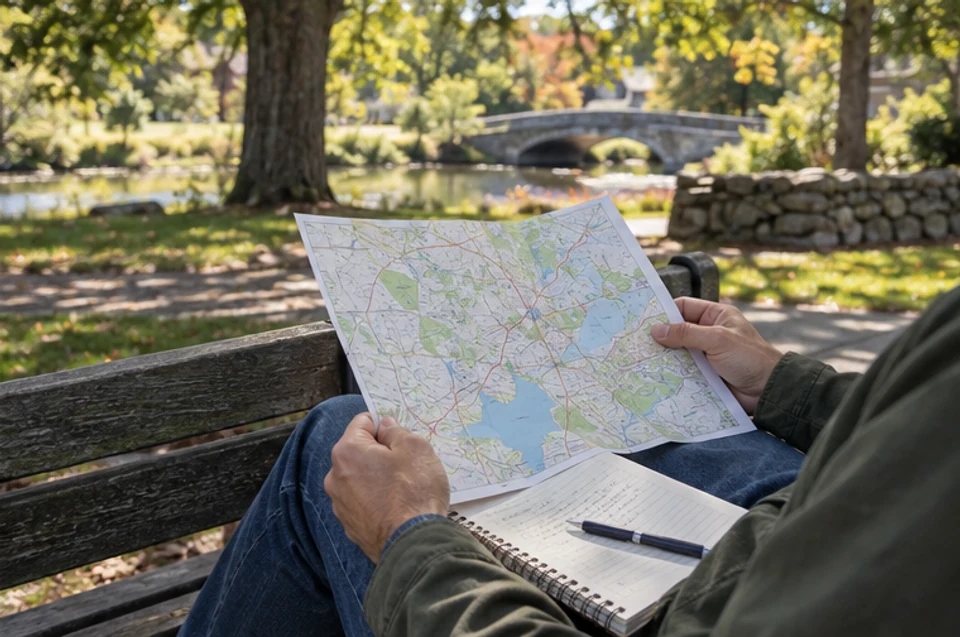
Check the route to errands or appointments you actually make. Record the options and the time you tested them. If you use transit, verify current schedules with the provider. If you drive, consider the return route and a different time of day. Do not assume that a nearby-looking point on the map is the entrance you will use.
Listen and look without turning a snapshot into a verdict
Notice sound, lighting, traffic, construction, and the way a street is used during your visit. If something could affect your decision, revisit at a different time or consult an appropriate municipal source. A quiet moment does not guarantee the same condition every day, and a temporary noise does not prove a permanent issue.
Keep your notes descriptive: “delivery truck stopped on the street at 4 p.m.” is more useful than “the town is noisy.” Avoid assumptions about who lives nearby or what a community is like based on appearance. Focus on the property, access, services, and routine you can verify.
Compare visits with the home record
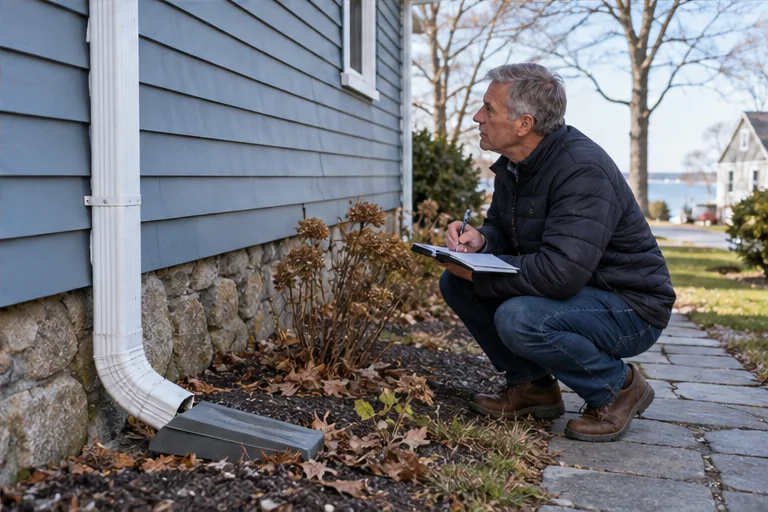
Pair your street notes with the home's listing, disclosures, inspection questions, property documents, and monthly costs. The outside context and the property's condition are different parts of the decision. If a lot, driveway, wall, tree, or drainage feature matters, ask an inspector, surveyor, or contractor what should be evaluated.
The field notes below help you track which observations are still open. Talk with Rita about a Natick, Framingham, or MetroWest search and share the routes and access details that matter to you. Rita can help coordinate local visits; town staff and qualified property professionals answer the questions within their responsibilities.
Plan a second visit where uncertainty remains
Return if the time, route, sound, parking, or access could change your decision. Go at a useful hour and repeat the same path so your notes are comparable. If you cannot revisit, identify another reliable source, such as a current transit schedule, town record, property document, or specialist review.
The most useful neighborhood visit is specific, dated, and honest about its limits. It helps you evaluate whether the home and the routes around it fit your life without asking one street corner to stand in for every day or every resident.