Start a home file on the first day
Gather closing documents, available permits, system manuals, warranties, service records, utility contacts, and the names of the people who know the house. Save the file in a secure place and keep a short index so you can find a furnace receipt, appliance manual, or contractor contact when a question comes up. Record the date and source of each item; do not turn an old estimate into a confirmed maintenance history.
Walk through the home with the inspection report and note items that call for follow-up. Separate immediate professional recommendations from future observations and routine tasks. If the report mentions a concern you do not understand, ask the inspector or an appropriate specialist to explain it before deciding whether it can wait.
Learn what equipment serves your home
Make a simple list of heating and cooling equipment, water heater, electrical panel, plumbing shutoffs, ventilation, and any well or septic system. Record the manufacturer and model from safe, accessible labels if you can read them without opening equipment. Keep a reminder of where the relevant shutoffs and service information are located, and ask a licensed professional to show you anything you are unsure how to operate.
Follow manufacturer instructions and professional recommendations for service timing. Different systems and installations can have different requirements, so a universal online calendar is not a substitute for the manual or a technician who has seen the equipment. Keep receipts and notes after each service visit and record what the technician recommends next.
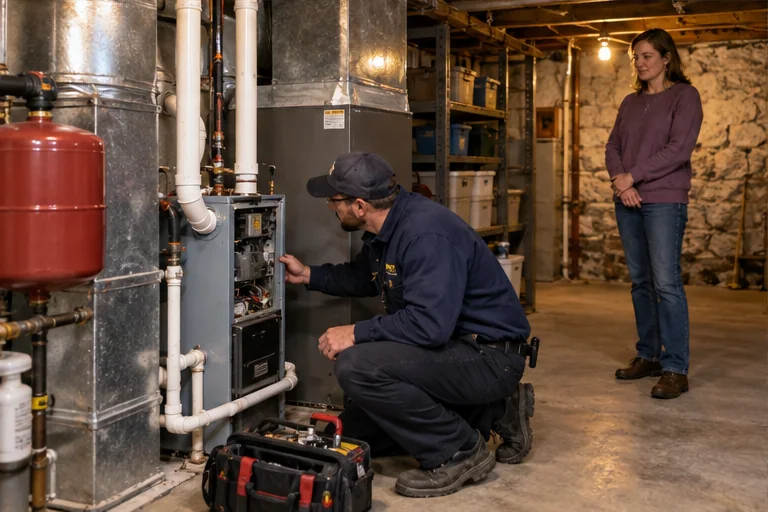
When a service provider explains a control, filter, valve, or maintenance indicator, ask them to identify the correct part and where its instructions are documented. Take a note or photo only with permission and without exposing personal account information. If a label is missing or equipment condition is unclear, record the question and have a qualified person identify it rather than guessing based on a similar home.
Notice changes before they become guesses
As you settle into the house, pay attention to visible changes in water, drainage, temperature, unusual sounds, or how doors and windows operate. A written note with a date and room can help a contractor understand what you noticed and when. It does not diagnose the cause. Avoid opening, adjusting, or repairing equipment unless you are qualified and the manufacturer's instructions say it is appropriate.
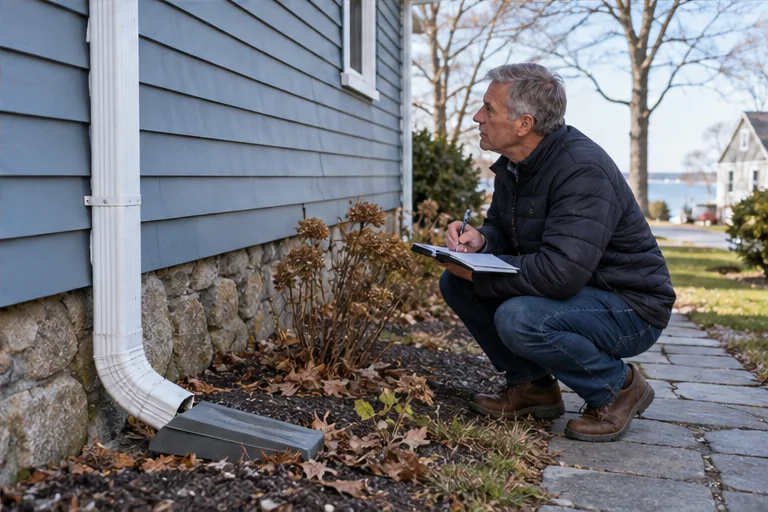
After significant weather, observe exterior areas from a safe place and note changes near downspouts, walkways, trees, and accessible foundation areas. If you see an issue that could affect safety or cause damage, contact a qualified professional rather than climbing, entering a hazardous space, or waiting for the next planned review.
Build a calendar around your own property
Use the interactive home file below to turn the guide's sections into reminders you want to revisit. Add dates based on the system manuals, inspection recommendations, your service provider, and your own move-in tasks. This tool is local to the page and does not save or send your choices.
Create a short contact list for urgent repairs, routine maintenance, utilities, insurance, and the town offices relevant to the property. Confirm contact details independently and save receipts, photos, and follow-up notes together. A record trail makes it easier to distinguish completed work from a question still awaiting a quote or inspection.
Review the plan after a few months
Look through the file for upcoming service recommendations, warranties with stated dates, and tasks you deferred while moving. Update the contact list and add the source of any new instruction. If you sell, remodel, rent part of the home, or change a system, ask the relevant professional which additional records or approvals apply before proceeding.
Rita can help buyers think through the local search and the questions they want answered before moving into a home. Talk with Rita about your next move or learn about her work in Boston and MetroWest.