Plan the search around the dates you can actually visit
Start with your move window, work schedule, travel budget, and the number of days you can spend touring. Tell your lender and agent what decisions you can make remotely and what you would prefer to evaluate in person. A realistic schedule leaves time for questions, records, and qualified reviews rather than requiring every decision during a short visit.
For a Boston or MetroWest search, shortlist towns using your own weekly routine. Compare the places you need to reach, housing types you are considering, and the range your lender says is comfortable. Use current MBTA and local transportation tools to check specific routes and schedules for the days and hours that matter to you. A map pin or station label does not establish door-to-door commute time.
Make each video tour answer a question
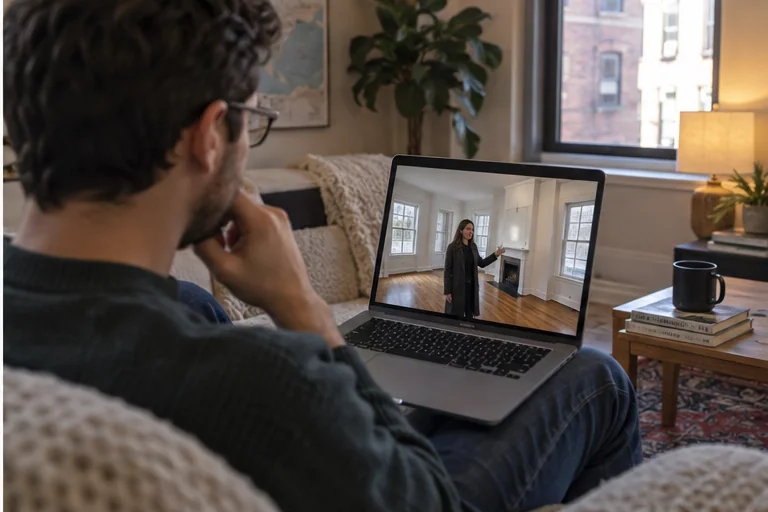
Before a live or recorded walkthrough, send the agent your questions and ask to see the entry, room transitions, windows, storage, visible systems, and the particular details that influenced your interest. Request a slow view of the street-facing side and the parts of the layout that are hard to understand from photos. If something is not visible, record it as unknown rather than asking the video to prove more than it can.
Take your own notes using the address and date. Keep a short list of seen on camera, stated by the listing, and still needs verification. Ask for the source of factual answers about dimensions, improvements, permits, utilities, and included items. A video can help you decide what to explore next; it cannot confirm hidden conditions, legal boundaries, or a system's performance.

Build a local review team
Identify a Massachusetts attorney, lender, and inspector before a property creates a rushed deadline. Depending on the home, a specialized professional may need to evaluate a system or feature. Ask how documents will be shared, how quickly a question can be answered, and who will attend any in-person review if you cannot travel.
Massachusetts has regulations addressing buyers' opportunity to obtain a home inspection. Read the current Mass.gov guidance and ask your attorney how it applies to your contract. Do not assume a remote tour, seller disclosure, or photo set replaces inspection or legal advice.
Reserve a visit for what remote media cannot show
If you can travel before making a final decision, use the visit to check questions that video does not settle: how the rooms feel at normal scale, the surrounding blocks, access to the places you visit, and the building or property's immediate setting. Visit at a time that resembles your real routine when possible, and confirm transportation details with current schedules rather than a generic distance estimate. If a visit is not possible, ask a trusted local professional what can and cannot be observed in person, and document any limitations before proceeding.
A live camera also changes perspective: a narrow lens can make a room look larger, while lighting and a phone's automatic exposure can hide shadows or stains. Ask the person filming to pause, step back, and show how one room connects to the next. Request measurements or a floor plan for dimensions, then confirm them through reliable property information. Treat anything the camera cannot verify as an open question for the inspection or records review.
Compare the plan, not only the listing photos
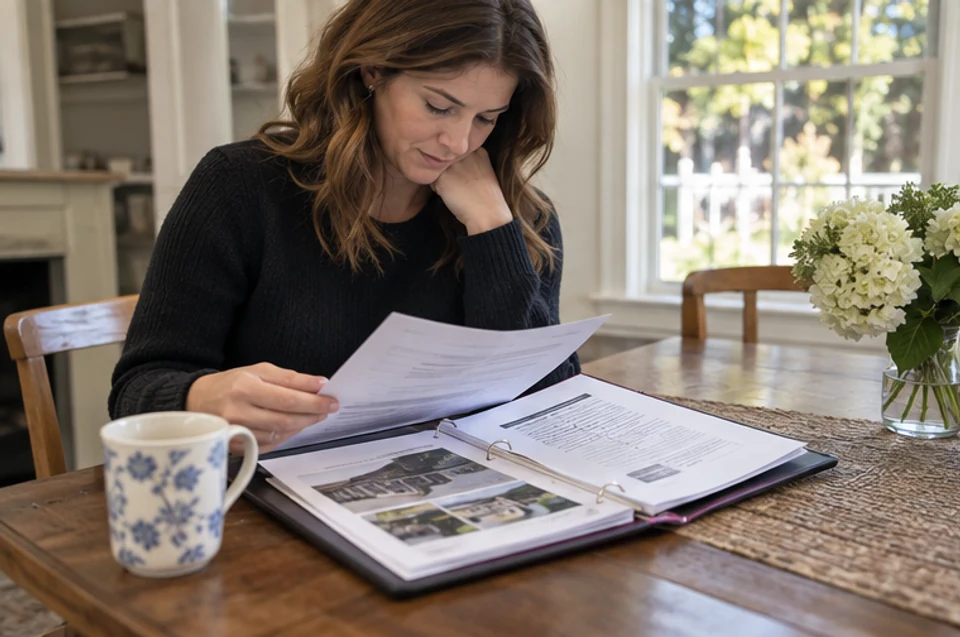
Keep one record for each address: tour notes, open questions, travel plan, records requested, professionals to consult, and decision dates. When two homes remain in consideration, compare them side by side using the scorecard below and your actual priorities. Do not let the convenience of a video call turn a provisional answer into a confirmed fact.
Rita can coordinate local showings and help buyers organize questions across Boston and MetroWest. Tell Rita your timing and search areas, then review her background and services while your attorney, lender, and inspector handle the reviews within their expertise.