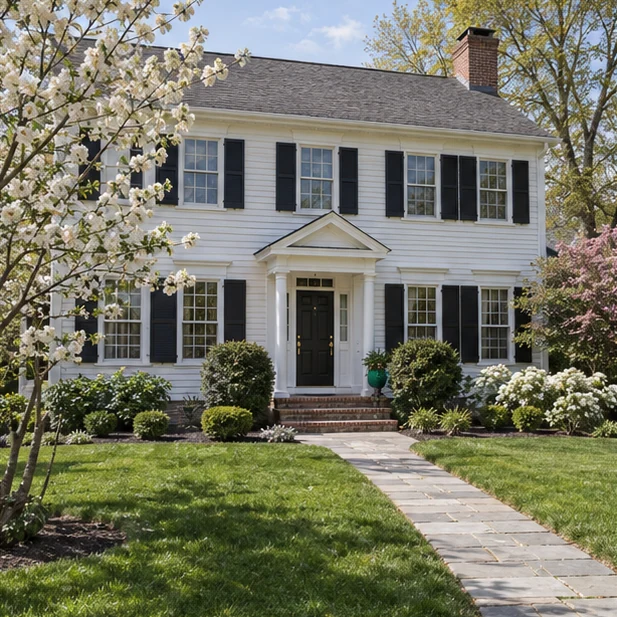
Read the land as carefully as the floor plan
A home's lot affects access, outdoor use, maintenance, and the questions you may need to resolve before buying. A yard that looks simple from the back deck can contain a slope, retaining wall, shared access, drainage path, mature trees, or a boundary detail that is not obvious at first glance. Record what you observe and keep legal or technical conclusions open until the right person verifies them.
Start by asking how you expect to use the land: parking, play, gardening, outdoor seating, or future work. Then compare that plan with what is visible, what the listing states, and what the records document. A marketing sketch can illustrate a layout but does not establish exact boundaries or rights.
Confirm boundaries and access from reliable records
Request the deed, survey, plot plan, easements, and other available property records through the appropriate process. The Massachusetts Land Records system can help locate recorded documents. Your attorney can explain legal instruments, and a licensed surveyor can determine whether a new or updated survey is appropriate for your question.
Look for shared drives, paths, utility access, fences, and structures close to a lot line. Do not assume a fence follows the legal boundary or that long-standing use creates a right. If access or ownership affects your plans, raise it before making a decision and allow time for professional review.
Notice grading, drainage, and retaining features
During a tour, note where the ground slopes, how water appears to move, where downspouts discharge, and whether a retaining wall or stair connects different levels. These observations do not diagnose drainage, stability, or a future maintenance need. A visible dry yard on one visit does not show how it behaves during a storm or spring thaw.

Ask for relevant reports, invoices, plans, and maintenance history. If a question could affect your intended use or repair budget, ask a qualified contractor, engineer, inspector, or surveyor whether a targeted review is needed. Do not rely on a map screenshot or a seller's estimate to make a technical conclusion.
Use maps as a starting point, not a property survey
Massachusetts offers an Interactive Property Map for general geographic context. Online parcel layers can help you ask better questions, but they are not a substitute for a boundary survey, recorded documents, or municipal confirmation. Map layers have scale, update, and interpretation limits.
Check local records and town departments when you need information about permits, floodplain context, conservation interests, or other mapped features. The relevant department depends on the town and the question. Confirm the data source and date, and ask a professional how it applies to the particular address.
Estimate the work of using the lot
List the regular tasks the land could involve: mowing, leaf removal, snow access, tree care, drainage maintenance, stairs, retaining areas, or shared-drive coordination. Ask which tasks are documented, which are handled by a service, and what records or agreements describe shared responsibilities. Keep estimates separate from actual quotes and note the area they cover.
If the property has septic, a private well, wetlands, a shared driveway, or other site-specific conditions, identify the reports and specialists involved. Ask whether permits or maintenance records are available and whether they are current. One report does not necessarily answer a separate question about boundaries, drainage, or future work.
Turn the tour into a verification checklist
Use a row for every feature that matters: visible condition, record requested, professional to ask, and decision deadline. Mark each as observed, documented, estimate, or unknown. The checklist below makes it easier to remember a follow-up question after you have toured several properties across Natick, Framingham, and other MetroWest towns.
Talk with Rita about reviewing a MetroWest property, and share which outdoor uses or access details matter to your search. Rita can help organize the local conversation; an attorney, surveyor, town office, inspector, or contractor should verify matters within their expertise.
Decide whether the parcel fits your plan
Before an offer, summarize the land features that support your intended use, the regular maintenance you are willing to take on, and any unresolved rights or technical issues. Ask your lender and attorney how property-specific findings affect your next steps. If an essential feature depends on an unverified boundary, access, or permit assumption, leave it unresolved until you receive reliable advice.
The house and lot are one purchase, but they raise different questions. A measured review helps you compare the outdoor spaces you can actually use and the responsibilities documented for the specific property, without treating acreage or a town label as a shortcut.