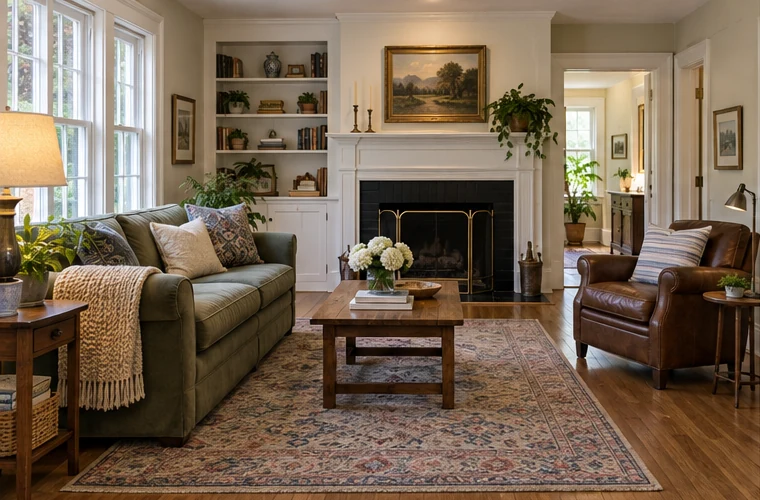
Stage for clarity, not for an imaginary household
An occupied home has two jobs during a sale: it needs to support daily life, and it needs to help visitors understand the rooms. Those goals can coexist. Staging is not a demand to remove every personal object or make a family home look untouched. It is a series of deliberate choices about sightlines, circulation, storage, and the way each space is presented.
Before moving anything, walk through the home as if you were seeing it for the first time. Notice where a person enters, where they naturally look, and whether furniture makes a room's purpose easy to understand. Take a few reference photos and write down the changes that could improve the view without creating a safety or household problem. In Natick, Framingham, Boston, or elsewhere in MetroWest, the right plan depends on this home's rooms and the people using them, not a universal staging formula.
Start with paths and room purpose
Clear, usable paths matter more than decorative accessories. In an entry, make the route from the door understandable and give everyday shoes or coats a contained place. In a living room, leave enough space to move around seating and show how people might gather. In a dining area, keep the table and circulation visible. A room that serves two purposes can still make sense if each use is presented intentionally.
Use a simple room note: the primary use, what should stay accessible, what can be stored temporarily, and the question you need answered before changing it. In a work area, for example, a desk may help explain the room while loose cables and unrelated storage can be tucked away. In a bedroom, keep essential furniture and make storage readable rather than hiding everything in a crowded closet.
Protect the people and the property
Do not block doors, stairs, exits, electrical panels, heating equipment, or access to plumbing and other systems. Keep accessibility equipment, medication, child-safety items, and other essential household resources available. Do not stack boxes where they can fall or move heavy furniture without the right help. These are practical safety decisions, not cosmetic trade-offs.
Secure valuables, personal documents, medication, and identifying information before any showing. A closed drawer is not a substitute for an agreed plan for sensitive items. Ask your listing professional how access is handled, how notice is provided, and what to do about pets, alarms, and rooms that require special instructions. A short written routine for the household can prevent last-minute confusion.
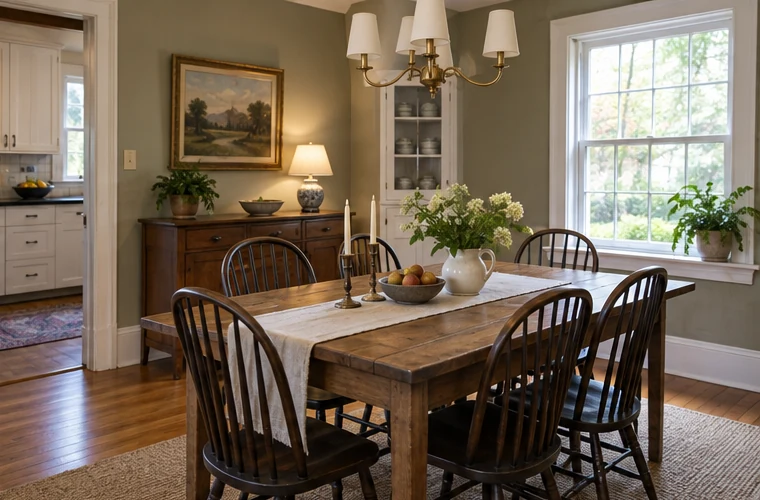
Make changes in reversible stages
Sort items into three groups: keep in the room, store temporarily, and ask before changing. Start with objects that are easy to move and not needed each day. Label containers by room, keep a quick inventory, and choose storage that remains dry, accessible, and clear of mechanical areas. If a piece is valuable, fragile, or meaningful, pause before donating or discarding it. A listing timeline is not a reason to make an irreversible choice in a hurry.
Some improvements may involve more than staging. Before painting, replacing a fixture, removing built-ins, or changing a room, ask whether the cost and timing make sense for the property's plan. If a condition raises a safety or maintenance concern, do not hide it with a decorative fix. Document the question and ask a qualified professional what should happen next.
Build one routine for photos and another for showings
Photography day can call for a more thorough reset than an ordinary showing. Make a checklist for counters, lights, window coverings, personal items, and anything the photographer needs to access. Then create a shorter version for future visits: clear the main surfaces, restore the walking paths, secure private items, and check the household's access plan.
Try the routine once before the first appointment and note how long it takes. If it is unrealistic, simplify it. A plan that the household can repeat is more useful than a perfect-looking room that takes hours to recreate. Agree on where daily-use items go so they can be found quickly after visitors leave.
Match presentation to the actual sale plan
Ask which rooms need attention first and why. A vacant property, an occupied family home, and a home with a dedicated workspace may need different presentation choices. Compare before-and-after photos from the same viewpoint instead of buying décor based on a generic example. If paid storage, furniture rental, or professional staging is being considered, understand the full cost and timing before committing.
Use the staging board below to choose a temporary path for each room topic. Talk with Rita about preparing a home for showings in Boston or MetroWest, or learn more about Rita's local approach. The goal is a clear, welcoming presentation that remains safe and workable for the people who live there.