
Decide what you need from the sale
Before building a to-do list for a Natick home, write down your timing, next move, and tolerance for repairs or disruption. A seller preparing to move quickly may choose differently from someone who has time to collect records or complete a project. Your goal is to make thoughtful, property-specific decisions, not to remodel by default.
Walk through the home with an agent and note what is known, what needs a contractor or other professional to review, and what simply affects presentation. If a repair, permit, property boundary, disclosure, or tax issue is uncertain, mark it for the appropriate expert instead of filling the gap with an assumption.
Walk the rooms with a buyer's questions in mind
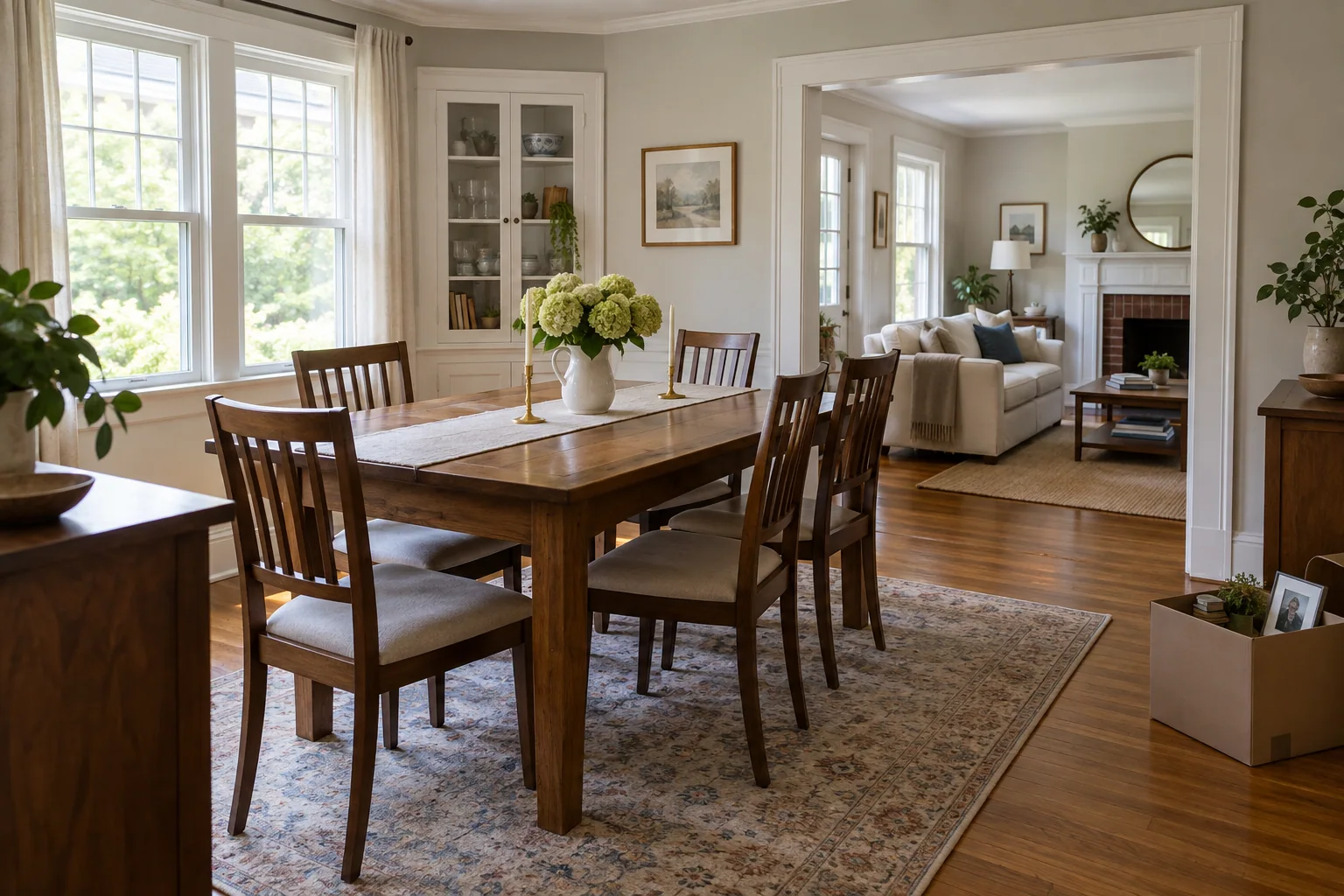
Start at the entry and follow the route a visitor would take. Note doors that stick, unfinished work, visible maintenance, storage, light, and how the rooms connect. Keep the house functional while you live there; clear paths and a simple reset routine are more useful than an unrealistic staging plan that cannot last through daily life.
Review each room for three distinct tasks: address a safety or maintenance concern, gather documents about an improvement or system, and decide whether removing a personal item would make the space easier to understand. Write down the reason for each action so optional polish does not quietly grow into a costly renovation.
- Kitchen and baths: Record known repairs, service history, and updates; do not imply that a recent surface update confirms the condition of hidden plumbing or wiring.
- Living and sleeping areas: Make the layout easy to read, keep access clear, and show how flexible spaces are currently used without promising a particular future use.
- Basement, attic, and utility areas: Gather available service records and note questions about equipment for a qualified inspector or contractor.
- Storage and circulation: Remove trip hazards and make closets, doors, stairs, and paths accessible for a normal showing.
Check the outside and the records
Review the entry, exterior surfaces, drainage paths, landscaping, shared access, and areas that need recurring care. Get estimates before committing to larger work. The goal is to understand condition and cost, not to infer what a buyer will pay more for from a cosmetic change.
Gather records for improvements, permits, warranties, system maintenance, and any issue a buyer may ask about. Make a separate note for what you personally know, what a document confirms, and what remains uncertain. An agent can help organize marketing information; an attorney, town office, inspector, or contractor may need to answer legal, permit, condition, or boundary questions.
Sort projects before spending
For each possible task, ask what problem it addresses, who can verify the need, what it costs, how long it could take, and how it affects your move plan. Compare the estimates with the simpler option of documenting the condition or leaving it for a buyer to evaluate. No project promises a particular sale price or return.
The preparation board on this page lets you sort topics into lanes as you make decisions. Use it as a discussion aid with Rita and your qualified professionals; it does not make a repair or disclosure decision for you.
Make showings workable for your household
Agree on notice, pets, valuables, personal photographs, parking, and the rooms that need a quick reset. Keep a log of questions and requests so you can respond accurately and consistently. Decide in advance who will confirm factual questions about improvements, systems, included items, or the home's condition.
If you are considering a sale in Natick, talk with Rita about the property and your timeline. Bring the records you have, the projects you are weighing, and questions you want answered before listing. You can review Rita's background and local services as you decide what support makes sense.