Ask what the recommendation is designed to do
A proposed asking price is a strategy for a specific property and moment, not a guaranteed sale price. Begin the meeting by explaining your move date, priorities, and tolerance for adjustments or additional preparation. Ask the agent what the recommended strategy is meant to accomplish and which facts would cause them to change it.
The Massachusetts consumer guide to real-estate brokers and salespersons describes the information included in a residential offer and encourages buyers and sellers to allow appropriate time for professional inspection. For pricing, ask your agent to show the property comparisons and explain their limits rather than relying on a single broad town average.
Read comparable sales as individual properties
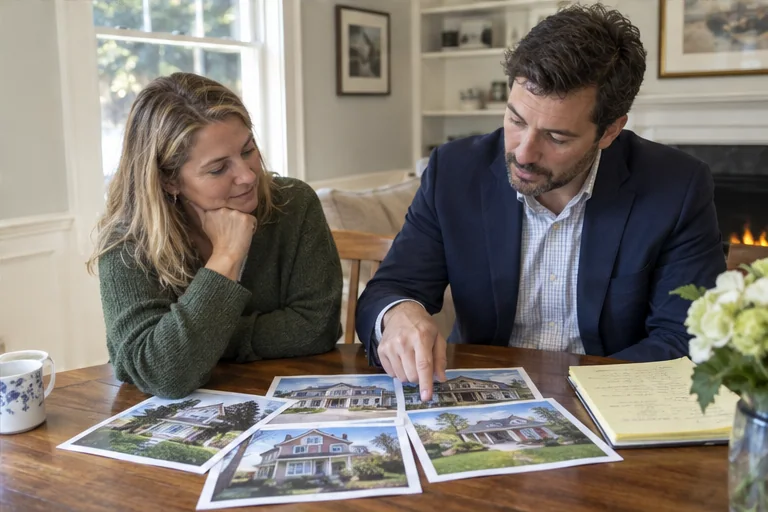
For each sale, note the address or area, sale date, property type, layout, condition, lot, updates, and features that matter for your home. Ask how far away it is and whether it reflects a similar buyer decision. A nearby sale may still differ in important ways, while a less-nearby sale may offer useful context for a specific home feature. The agent should be able to explain why each example belongs in the discussion.
Keep closed sales separate from current listings and pending transactions. An asking price shows what a seller is requesting, not what a buyer ultimately paid. A pending property may not yet have a public final sale price. Ask what information is verified and what is an estimate or unknown.

Discuss adjustments without pretending they are exact
Make a column for similarities, a column for meaningful differences, and a column for information you still need. If a comparable has another bathroom, different lot, renovated kitchen, or different system, ask how that affects the discussion and what evidence supports the adjustment. Avoid treating a quick dollar-per-square-foot calculation as a complete valuation; layout, condition, location, and buyer response all matter.
Ask the agent to show the source and date of the sales information. Confirm that the property matches the records and clarify whether concessions or unusual conditions affect the comparison if that information is available. You can ask for a second set of relevant examples if the first group does not explain the recommendation.

For each example, ask why it is included and what would make it less comparable. A different property type, substantially different condition, unusual sale circumstance, or a date from a different market moment may deserve less weight. The point is not to find a perfect twin; it is to understand the reasoning, recognize the trade-offs, and know which comparisons are carrying the recommendation.
Ask how the recommended asking strategy relates to current competition and the plan for reviewing buyer response. Agree on when you will revisit the recommendation and what information you will consider together. That conversation does not predict the market; it gives you a clear process for responding to new evidence without reacting to a single showing or online comment.
Connect the strategy to your timing
Consider the likely preparation schedule, photography, launch date, showing plan, and what you would do if the first response differs from expectations. Ask which signs the agent will monitor and when you will review the strategy together. No price or timeline can guarantee a particular result; make sure you understand the decisions you control and the uncertainty that remains.

Use the field notes below to mark what you want clarified in a pricing meeting. If you are preparing a Natick, Framingham, Wellesley, or broader MetroWest home for sale, discuss the property and your timing with Rita. You can review her local services before choosing a plan.