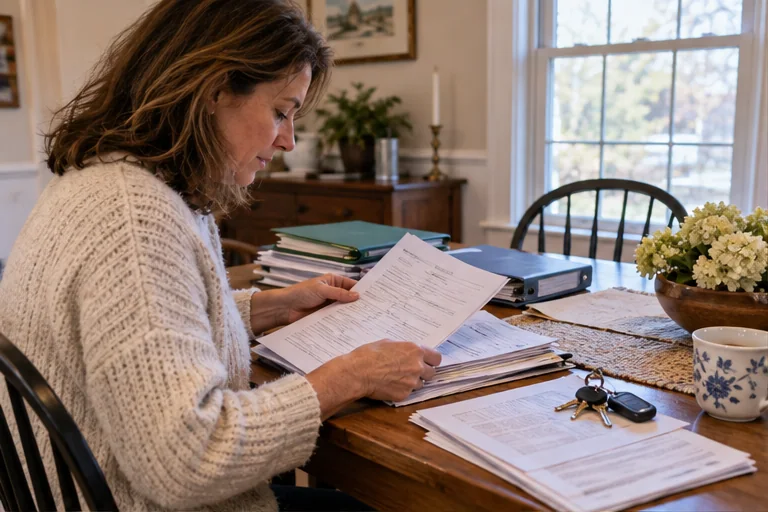
Start with the records you already have
Before a listing meeting, collect documents that help explain the home's history and current responsibilities. You may have purchase papers, surveys, plans, receipts, permits, warranties, manuals, service notes, utility information, and records from prior work. Availability varies by house; not having a record does not automatically explain why it is missing or what legal obligation applies.
Sort the file by topic and date. For every document, note which property it describes, who prepared it, and whether it is final, a draft, or a quote. If you are unsure whether a detail is accurate, mark it for follow-up instead of summarizing it from memory.
Build a system and improvement timeline
Make a simple list of known work on the roof, heating and cooling, plumbing, electrical systems, windows, drainage, additions, and other major features. Include approximate dates only when you have a reasonable source, and keep estimates separate from confirmed completion dates. Attach invoices, permits, inspection reports, warranties, and contractor contacts where available.
If you have a question about permits, zoning, boundaries, title, disclosures, or the legal significance of an agreement, ask the appropriate Massachusetts attorney or local department. A receipt may show that work was paid for, but it does not by itself answer whether permits were needed or what was approved. A public record can help identify follow-up questions; it may not describe every condition in a home.

Add records for the property's specific features
For a condominium, ask the association or manager which governing documents, current budgets, insurance information, minutes, and notices are available. For a home with private well, septic, shared access, a private road, or other unusual feature, request the relevant report, maintenance agreement, map, or system record. If tenants occupy any part of the property, consult an attorney about the agreements and information that should be assembled and how tenant privacy and access should be handled.
Keep these records separate from marketing materials. A property feature or maintenance question belongs in a verifiable file, not only in a listing draft. If a system inspection or town record is pending, note when it was requested, from whom, and who will follow up.
For digital records, use descriptive file names that include the topic and date, and keep the source document unchanged. If a PDF contains several subjects, save a note pointing to the relevant page rather than altering the original. Share information through a secure method approved by your attorney or brokerage, especially when a record contains account details, signatures, tenant information, or another person's personal data. Ask before distributing a document whose intended audience is unclear.
Give professionals a reliable source folder
Create a read-only digital folder or a labeled physical binder and keep the originals safe. Avoid sending bank details, government IDs, tenant records, or other sensitive material through a public link. Ask the attorney or brokerage which secure method is approved for documents that contain private information.
At the listing meeting, bring a one-page index of what you have, what you requested, and what you still cannot verify. That lets the agent build accurate copy from confirmed details and gives your attorney a concise list of transaction questions. Keep the file updated as new records arrive and retain the version you used to confirm each factual claim.
The preparation board on this page helps you sort tasks into available, requested, and needs professional review. It is not a legal disclosure form and it does not decide which documents you must provide. Before marketing the home, ask your attorney about transaction-specific requirements and have the agent verify factual claims against the records you actually have.
Rita can help frame a Boston or MetroWest listing discussion around your home's condition, records, and timing. Share your questions with Rita and learn more about her local work before you decide which preparation steps make sense.