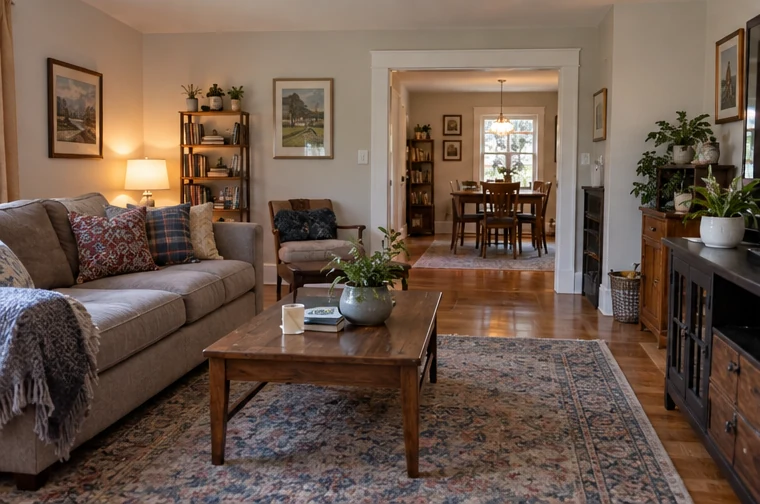
Keep the home comfortable while preparing to sell
Decluttering an occupied home is a series of small choices, not a requirement to remove every sign that someone lives there. The goal is to keep paths clear, make storage easier to understand, and help visitors notice how rooms can work. A comfortable home also needs to function for the people who live in it while photos and showings are under way.
Start with the rooms visitors will see first and choose one manageable area at a time. Before moving anything, take a quick photograph for reference. Decide what needs to stay in daily use, what can be stored temporarily, and what should be reviewed with your agent or family before it leaves the room.
Preserve the room's purpose
In an entry, keep a clear route and a practical place for coats and shoes. In a living room, leave seating and circulation visible. In a kitchen, clear enough counter space to show the work areas without making meal preparation impossible. In a bedroom, keep essential furniture and demonstrate storage without turning closets into a dumping ground.
If a room serves more than one purpose, identify how it works now and what can be simplified for photography. A desk can remain if it helps explain a flexible room; loose cords or unrelated storage can be moved. Do not remove safety items, accessibility equipment, or daily essentials simply to create a more polished image. Ask your agent which details are most useful for buyers to understand.
Sort by access, sensitivity, and timing
Choose a storage location that will not block exits, mechanical equipment, or everyday access. Label boxes by room and keep a short list of what was moved so you can find it later. Avoid storing heavy items where they are difficult or unsafe to retrieve. Personal documents, medication, valuables, and identifying information should be secured before any showing, not merely placed out of camera view.
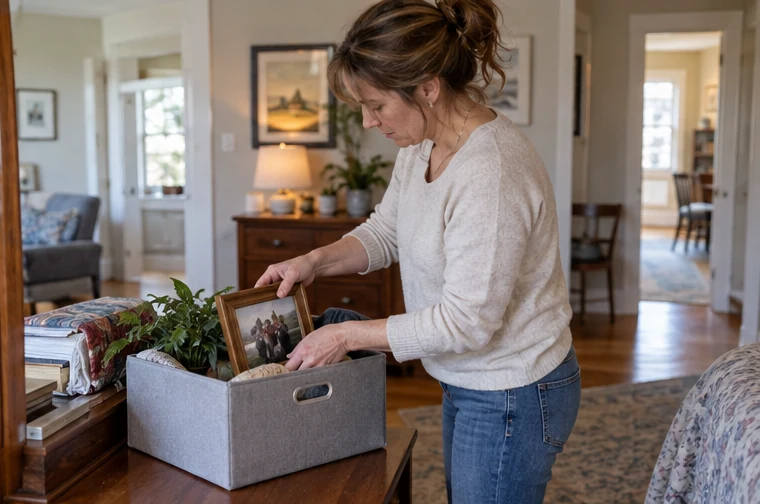
Make a small reset routine that fits the household: clear a table, return daily items to a bin, and check the main walkways. If showings occur while you are away, follow your listing professional's guidance for access, pets, security, and any rooms that should remain closed. A home does not need to be staged identically at every hour to be ready for a scheduled visit.
Make selective changes instead of a full purge
Use three groups: keep accessible, store temporarily, and decide later. If an object is meaningful or expensive, pause before donating or discarding it. Some choices involve the household, a move plan, or a future room layout; they do not need to be settled during the first walkthrough. A temporary container can reduce visual clutter while preserving the option to reconsider.
If a large piece of furniture makes a room hard to navigate, ask your agent whether rearranging it would improve access and photography. Compare options with a quick photo before paying for storage or moving. Do not buy new décor simply because an online staging image suggests it; the right decision depends on the actual room and your sale plan.
Plan for photos and repeated showings
Agree on a simple checklist for the photo day and a shorter reset for later visits. Note any items that need special handling, lights or doors that should be checked, and how pets or household schedules will be managed. If photography or moving creates a safety issue, resolve it before the appointment rather than hiding the concern.
The preparation board below turns the article into a list of room decisions. Talk with Rita about listing preparation in Boston or MetroWest and decide together which spaces need attention first. The aim is not to erase your home; it is to make its layout and care easier for a buyer to understand while preserving a workable daily routine.