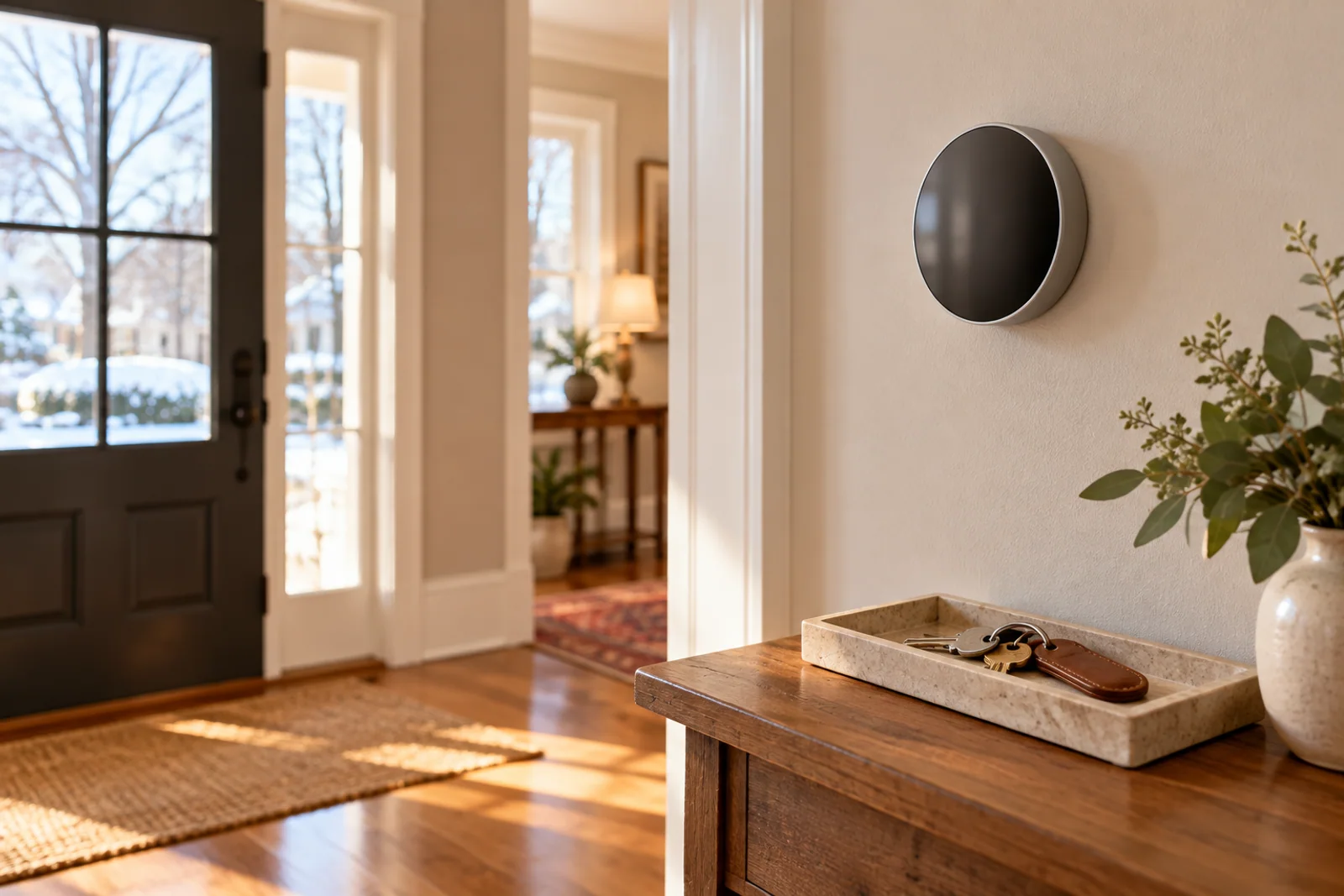
Start with the decision behind smart home device transfer after home purchase
A useful review starts with a decision you can name. For this address, separate what you personally need from what a listing suggests, then write down how much time you have to confirm each point. That keeps a home search grounded in your routine, budget, and evidence rather than a general description of a neighborhood or property type.
Connected locks, cameras, thermostats, and speakers can retain access or personal data after a home changes hands. Clarify which devices are included and agree how accounts, codes, subscriptions, and recordings will be handled. Follow each manufacturer’s security instructions; a physical reset alone may not transfer account ownership.
A device can be attached to the property but still linked to the seller's personal account or cloud storage. Some features require a service plan or a Wi-Fi network that will change on move day. Ask the seller which equipment stays and whether any camera records shared spaces or neighbors.
Turn the question into a property-level review
Choose which devices you intend to keep, replace, or disconnect. Prioritize changing administrator access and access codes at possession, then connect devices to your own accounts and network. If an item is not included, make sure it is removed only as agreed and that the opening is safely addressed.
For a useful review, keep the address and the exact feature in view. Ask whether the answer applies to the whole home, a single room, a shared area, or a particular date. If the property has changed since a document was created, note what changed and who can confirm the present condition. A good comparison does not hide uncertainty; it makes the unresolved part visible early enough to act on it.
Gather evidence from the right source
Create an inventory with device location, model, account transfer steps, subscription status, and any documents the manufacturer requires. Ask the seller to remove personal access and confirm the handoff in writing. Review the device maker's current instructions and avoid handling someone else's stored recordings.
A source is useful only when it can answer the specific question in front of you. Keep its date, scope, and limitations beside your notes. If the information is incomplete, label it as open instead of filling the gap with a broad rule or an assumption from another property.
When information crosses professional boundaries, keep the questions separate. A lender can explain financing assumptions but does not inspect the building. A contractor can scope work but may not determine a legal right. A municipal record can document an approval but may not describe the current physical condition. Ask the source what its answer covers and what would require another review.
Compare the actual alternatives
Use the same criteria for every address so the comparison stays fair. Mark each point as observed, documented, estimated, or unknown. A simple note about what would change your decision is more useful than an overall score that hides a budget limit or a property-specific concern.
Do not assume that changing the Wi-Fi password removes every old user, shared key, camera viewer, or cloud backup. Avoid asking the seller to disclose personal passwords. Use the manufacturer's account recovery and transfer flow and respect local privacy rules for cameras and audio devices.
For each property, keep a short record of the address, date checked, source, answer, and next step. Do not compare a confirmed fact for one home with an estimate for another as if both had the same confidence. If the cost or timing could change your decision, request a current written answer before treating the comparison as settled.
A focused checklist
- List included devices and current account owners.
- Use each manufacturer's current reset and transfer steps.
- Change codes and administrator access at possession.
Decide what to do next
Make the digital handoff a dated closing checklist item and confirm who completes each device reset. Buyers planning a connected-home transition can organize the property side with Rita, while device security and account support should follow the manufacturer's guidance.
Real-estate coordination can help organize the sequence and make the next question easier to ask. Technical condition belongs with the relevant inspector or contractor; financing belongs with a lender; legal meaning belongs with an attorney; and public records belong with the responsible municipal or state office.
A useful next step is small and specific: request one record, book one qualified review, test one route, or compare one dated quote. Save what you learn and revisit the decision using the same criteria. Buyers and sellers exploring Boston and MetroWest can talk with Rita about a practical property plan or learn more about her local real-estate work. The conversation can organize the real-estate process; it does not replace legal, lending, inspection, insurance, tax, or construction advice.