Start with the decision behind musty basement smell home buyer
Make the question specific enough that two people could check the same thing and compare notes. Identify the exact room, route, document, system, or date involved. A local search becomes more manageable when each open point has one source and one next action instead of a broad wish to learn more.
A musty odor is an observation that deserves a question, not a diagnosis. Its cause could relate to moisture, stored materials, ventilation, a drain, or another condition. Notice where it is strongest and what surfaces or areas appear different, but do not move belongings or make a health conclusion during a tour.
An odor may be more noticeable after rain, in a closed room, or near a floor drain. A single visit cannot establish its source or duration. Ask the seller whether there is a history of water entry or prior work, then look for dated records that support the answer.
Turn the question into a property-level review
Keep the sensory observation separate from any conclusion about mold, health, drainage, or structural condition. Let a qualified professional identify what testing or repair makes sense. If the issue could affect your use or cost, set a date for answers before the next contract decision.
For a useful review, keep the address and the exact feature in view. Ask whether the answer applies to the whole home, a single room, a shared area, or a particular date. If the property has changed since a document was created, note what changed and who can confirm the present condition. A good comparison does not hide uncertainty; it makes the unresolved part visible early enough to act on it.
Gather evidence from the right source
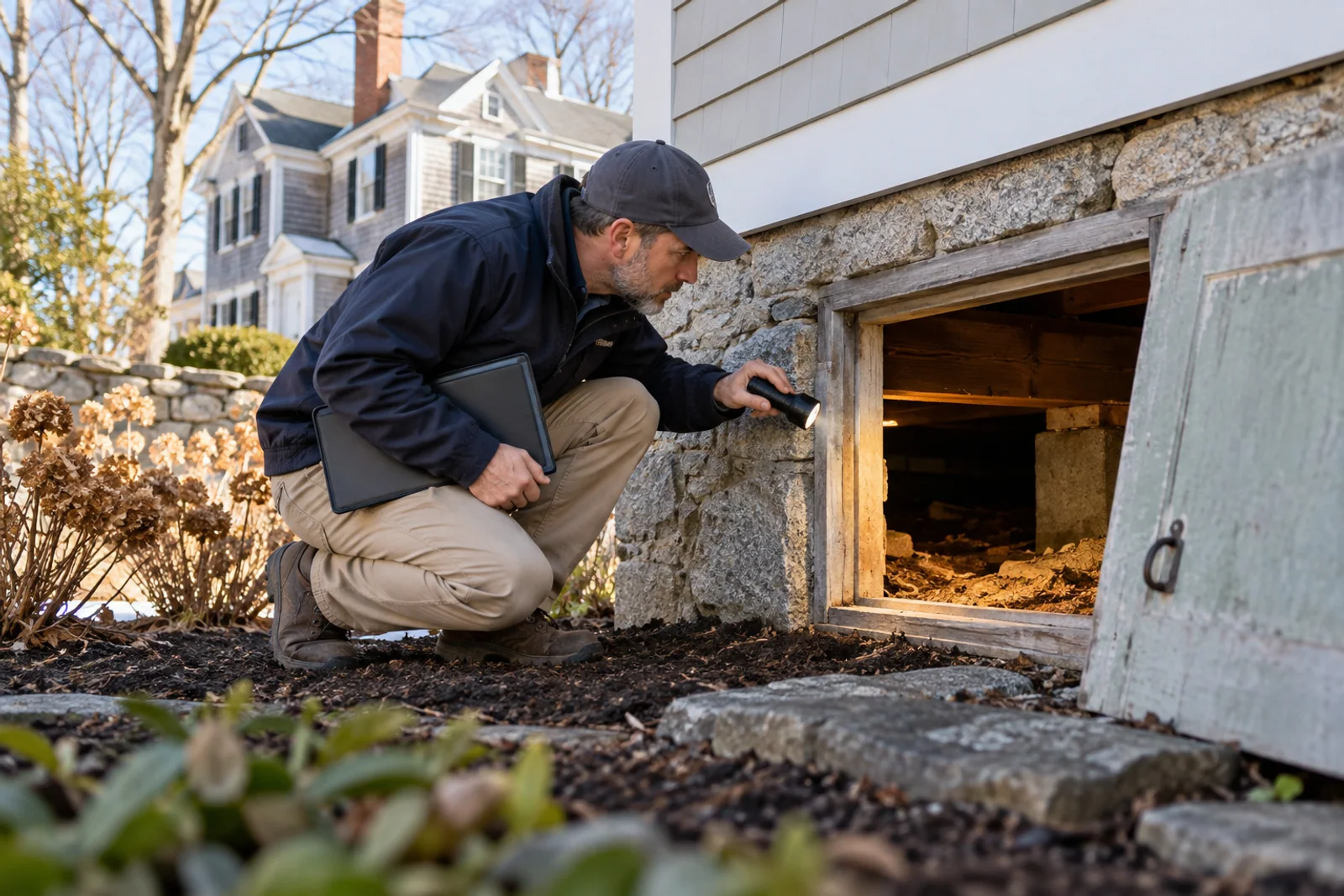
Include the location and conditions in your notes, such as recent rain or closed windows, and ask your inspector to evaluate accessible areas. If the inspector recommends moisture, plumbing, indoor-air, or structural expertise, request the relevant specialist's written findings and the limits of the evaluation.
The strongest record is the one that actually addresses the question, not simply the most official-looking page. Check the address, parcel, version, period, and author. If a record is missing, ask how the office indexes older files and avoid drawing a conclusion from absence alone.
When information crosses professional boundaries, keep the questions separate. A lender can explain financing assumptions but does not inspect the building. A contractor can scope work but may not determine a legal right. A municipal record can document an approval but may not describe the current physical condition. Ask the source what its answer covers and what would require another review.
Compare the actual alternatives
Use a short decision test: what fits, what is verified, and what remains open. Revisit that test after a tour or new document arrives. It prevents a memorable feature from overshadowing a hard requirement and helps you decide when more research is actually useful.
Do not rely on air freshener, a dehumidifier running during the showing, or a seller's brief reassurance as proof that there is no moisture issue. At the same time, do not label the home contaminated based only on smell. Ask for evidence and an appropriate evaluation.
For each property, keep a short record of the address, date checked, source, answer, and next step. Do not compare a confirmed fact for one home with an estimate for another as if both had the same confidence. If the cost or timing could change your decision, request a current written answer before treating the comparison as settled.
A focused checklist
- Record location and conditions without disturbing the space.
- Review any dated moisture or repair history.
- Use a specialist if the inspector recommends one.
Decide what to do next
Write the exact place, time, and conditions of the odor in your inspection notes. Share that observation with the inspector and request a clear follow-up path. Buyers comparing older MetroWest homes can coordinate questions with Rita while environmental and building evaluations go to specialists.
Choose follow-up by the type of judgment required. A visual observation may call for an inspector; a system issue may need a licensed trade; a recorded right calls for counsel or a surveyor; and a town approval question belongs with municipal staff. Ask each person to explain what their review does not cover.
A useful next step is small and specific: request one record, book one qualified review, test one route, or compare one dated quote. Save what you learn and revisit the decision using the same criteria. Buyers and sellers exploring Boston and MetroWest can talk with Rita about a practical property plan or learn more about her local real-estate work. The conversation can organize the real-estate process; it does not replace legal, lending, inspection, insurance, tax, or construction advice.