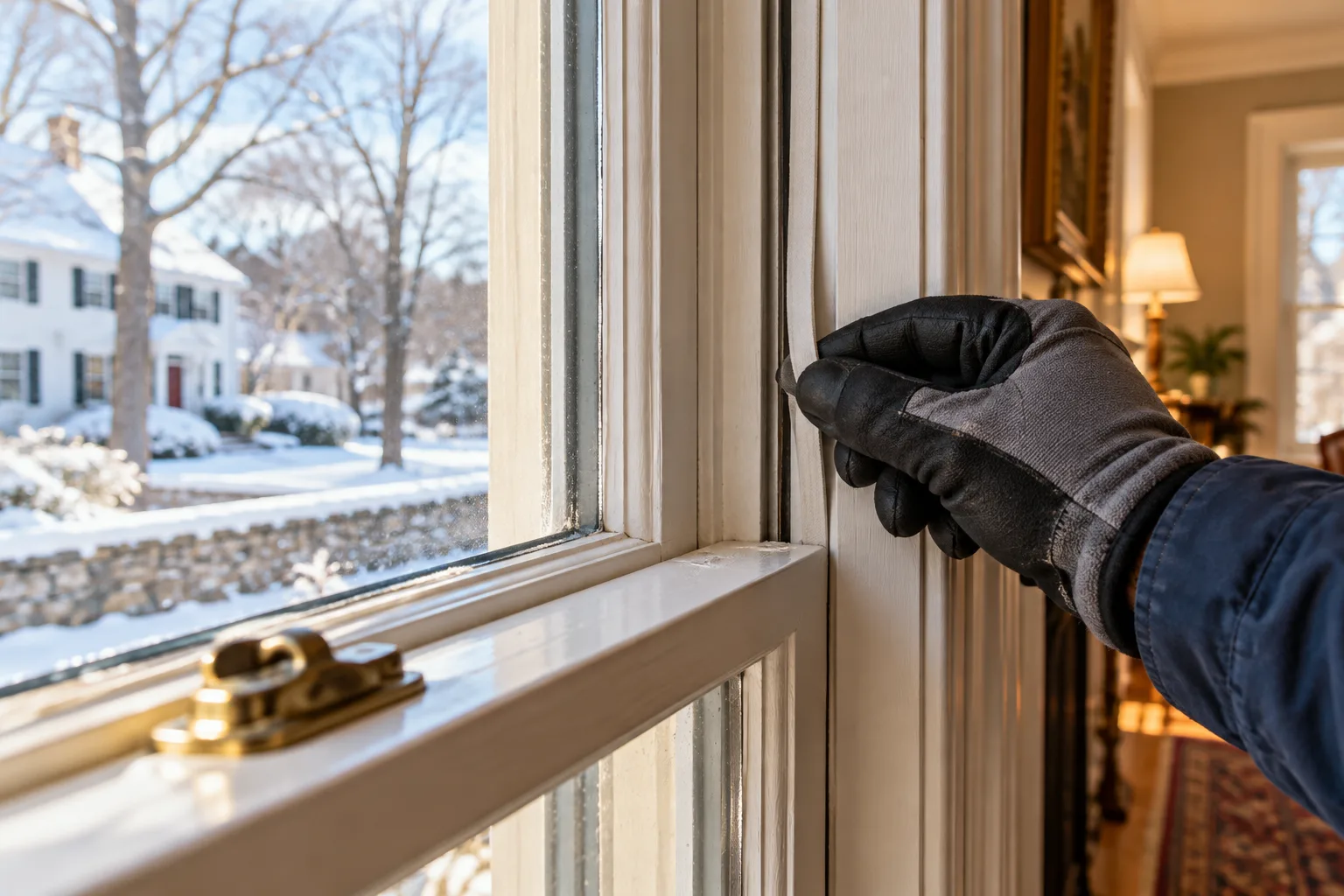
Record the conditions before changing anything
If a room feels drafty, note the window or door, the date, indoor conditions, and whether the sensation changes with wind or heating use. Describe what you can observe: a visible gap, a loose latch, condensation, or a temperature difference. Do not assume you know the cause. Air movement, worn components, ventilation, exterior exposure, and other factors may require different explanations.
Take a clear photo of the visible area if it helps you track a change. Avoid using flame, smoke, tools, or improvised tests near a window or heating equipment. Do not cover a vent or alter a device that affects ventilation, fire safety, or moisture management.
Find the information for this particular window
Look for product labels, manuals, prior invoices, or warranty documents. Ask the installer or manufacturer whether the information you found identifies the model and what maintenance is appropriate. If the home is part of a condominium, ask the association who is responsible for the window and exterior components before arranging work. Review any written rules that apply to changes visible from outside.
If you are buying the home, keep the observation separate from a diagnosis and ask your inspector or a qualified window contractor what evaluation is appropriate. If you already own it, contact a qualified professional when the source is unclear or the issue persists. Ask whether a repair could affect ventilation, drainage, a warranty, or another component before approving work.
Compare repair proposals by scope
When you request an estimate, show the professional the location and the notes you recorded. Ask what they observed, what work is included, which materials they propose, and what is excluded. Request a written scope, price, timing, and any permit or association question that needs resolution. A low-cost surface fix may not address the underlying cause; a broad replacement proposal may also need an independent explanation.
Keep the estimate, service record, before-and-after photos, and warranty information together. Note who performed the work and when. If the condition returns, this history helps the next professional understand what was attempted without relying on memory.
Choose the right next step
For an immediate safety issue, follow the relevant safety instructions and contact the appropriate emergency or service professional. For a persistent comfort or maintenance concern, start with documentation and a qualified evaluation instead of sealing a component based only on appearance.
New homeowners in Boston MetroWest can ask Rita how to organize property follow-up after a move. Diagnosis and repairs should come from qualified building professionals familiar with the specific window and home.