Start with how the laundry setup fits your routine
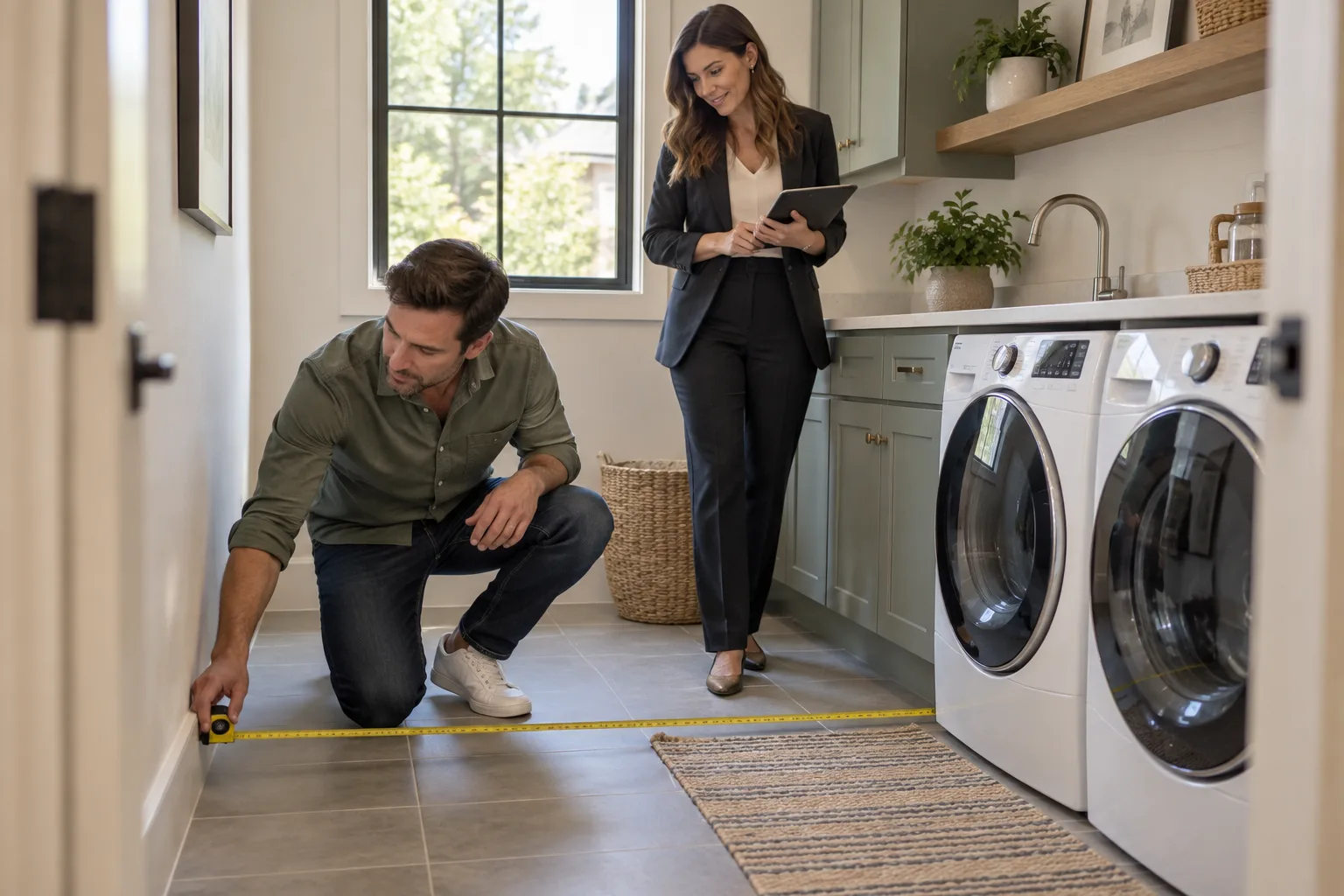
A laundry room can affect daily convenience, noise, storage, and future maintenance. During a MetroWest home tour, note where the machines sit in relation to bedrooms, living areas, stairs, and the likely route for carrying baskets. A compact closet can work well for one household and feel limiting for another; compare the actual dimensions with the way you expect to use the space.
Record what is present and what remains unknown. A listing may mention a washer and dryer, but that does not by itself confirm that the appliances are included, that hookups are active, or that a particular installation meets your needs. Ask the seller or listing representative for the applicable written details and keep the appliance question separate from questions about the building systems.
Look at the visible connections and room conditions
From a safe, ordinary viewing position, observe the water connections, drain area, electrical outlet, and dryer vent path. Look for visible staining, unusual odors, damaged hoses, or signs of a past leak, but do not move appliances, open panels, disconnect equipment, or treat a quick visual check as an inspection. Ask whether the machines and connections have service records and whether any recent work was completed by a qualified professional.
For a vented dryer, ask where the vent runs and when it was last serviced. A long, concealed, or difficult-to-access route may raise a useful follow-up question, but only a qualified technician can assess its condition and suitability. For a ventless unit, identify the model and maintenance steps from its documentation rather than assuming every appliance works the same way.
In a condominium or multi-family property, clarify whether the laundry area is inside the unit, shared, or governed by association rules. Ask about access hours, machine ownership, payment, maintenance responsibility, and any reservation process. Confirm answers in current documents; a neighbor's routine is not a substitute for the written rule.
Compare the setup with your actual needs
Consider noise at the times you normally do laundry, storage for supplies, room to sort or fold, and whether the location works for anyone with mobility or caregiving needs. If the machines are in a basement, note the stairs and lighting. If they are on an upper floor, ask whether any visible floor or ceiling issue needs professional follow-up. Do not infer structural performance from a single tour.
When comparing two homes, use the same checklist: location, approximate usable space, appliance inclusion, visible condition, vent or drain questions, and maintenance records. Label each answer as observed, documented, or still unverified. That distinction keeps a convenient-looking setup from becoming an assumption about future repair costs.
Turn open questions into clear next steps
Ask the relevant inspector or licensed trade professional to evaluate a concern that goes beyond ordinary observation. Send the exact question and, when available, the appliance model or service document. For a condo, ask the association or manager about shared equipment and responsibility. Keep legal, insurance, and code interpretations with the qualified professional or public office responsible for them.
Before an offer or inspection deadline, list the few laundry details that could change your decision. A specific question—such as who maintains a shared machine or where a dryer vent terminates—is easier to resolve than a broad request to “check the laundry room.” Buyers comparing homes in Natick, Framingham, Wellesley, and nearby communities can bring that list to Rita to organize the property follow-up.